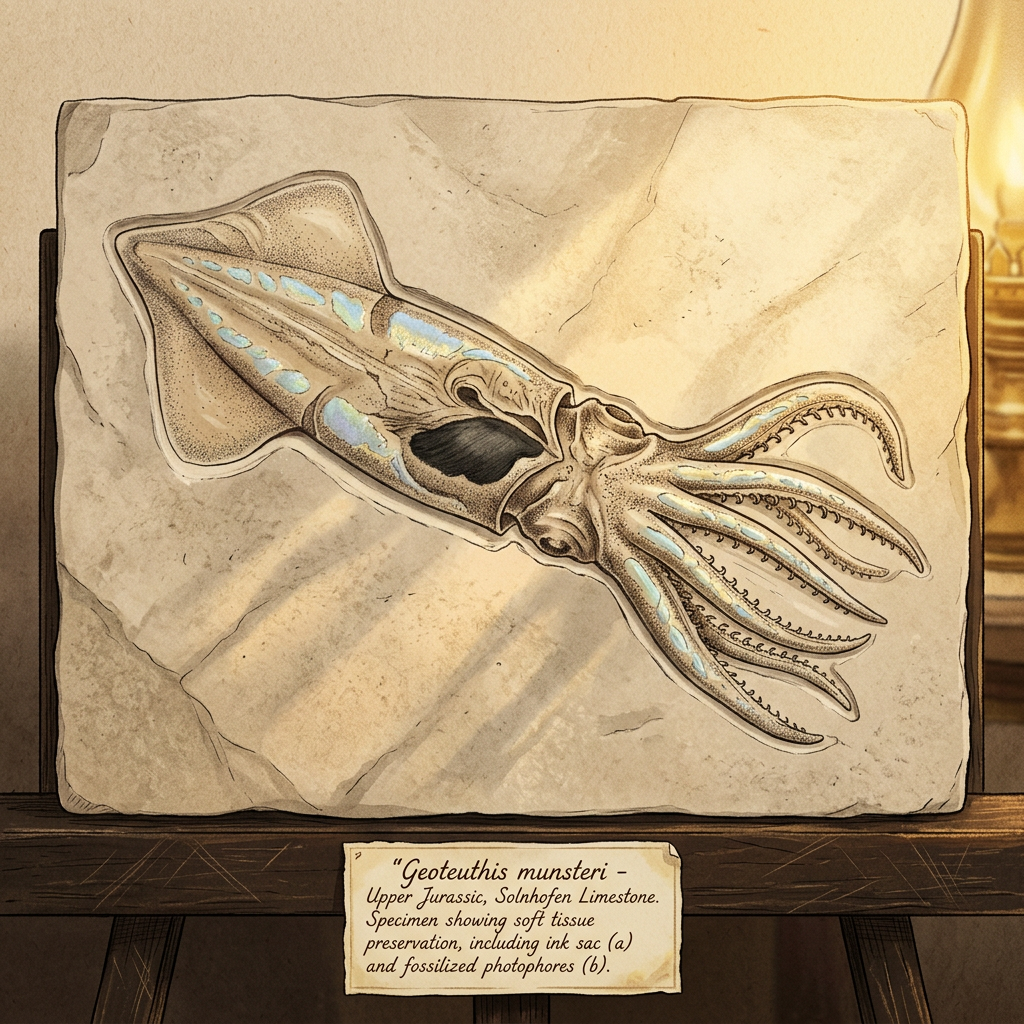
Palaeontologists have unearthed an exceptionally preserved fossil of a previously unknown cephalopod species in the arid stretches of South Australia. Dating back to the Jurassic period, the specimen features intact soft tissue, including a well-preserved ink sac and specialized cells that suggest the creature possessed bioluminescent capabilities for deep-sea hunting in the ancient Eromanga Sea.
This discovery provides a rare glimpse into the evolution of marine predators, demonstrating that complex light-producing organs and ink-based defense mechanisms were already highly developed millions of years earlier than previously thought. The site’s unique mineral composition allowed for the mineralization of delicate tissues, which usually decay before fossilization occurs.