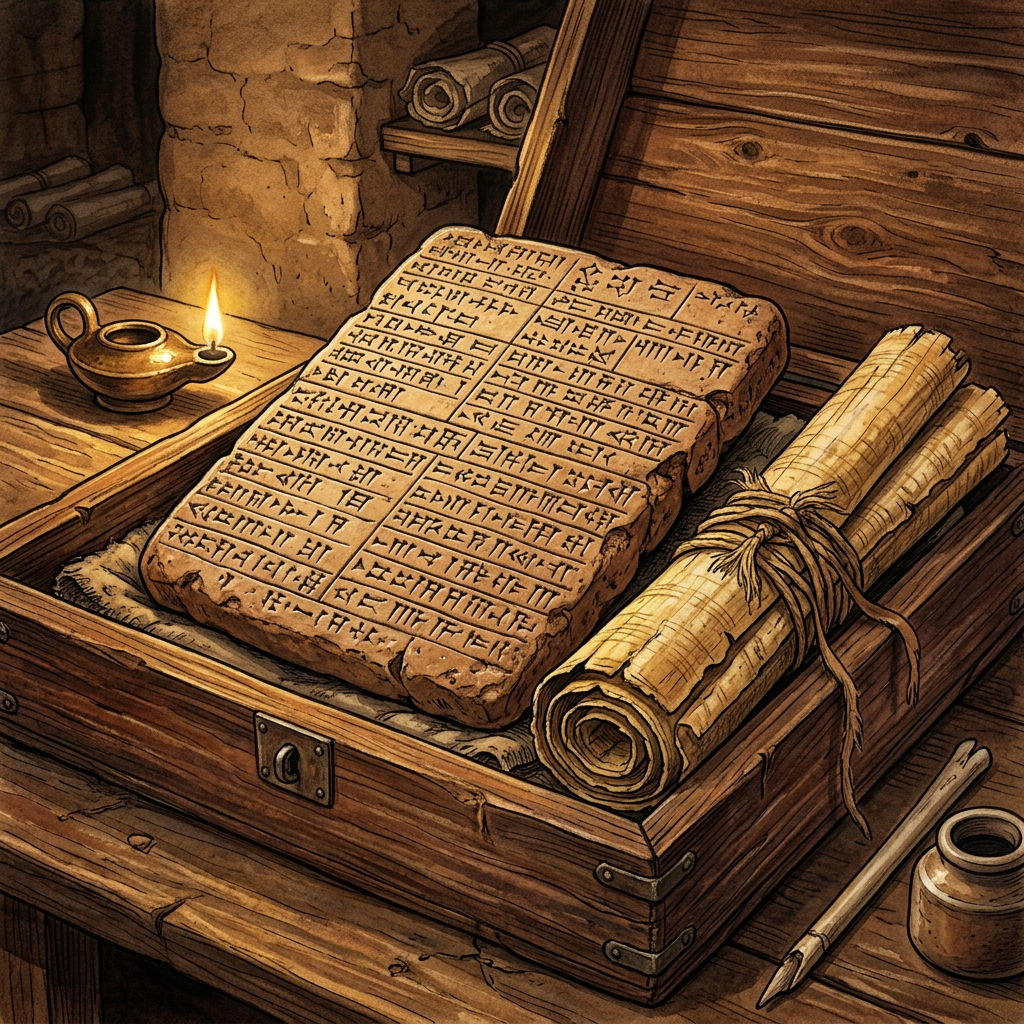
Excavations in the administrative quarter of Ancient Lagash have yielded a remarkable cuneiform archive belonging to the 'Master of Royal Papyrus-Exchange.' These tablets provide the earliest direct evidence of a state-monopolized trade network between Mesopotamia and the Nile Valley during the Third Dynasty of Ur, specifically tracking the import of high-grade Egyptian papyrus in exchange for Sumerian wool and bitumen.
The ledgers detail the quality-control standards used by Sumerian scribes to grade the imported writing material and the specialized cedar-wood storage chests designed to prevent humidity damage. This discovery reinforces the view of Sumerian cities as global trade hubs with highly specialized departments for managing exotic commodity flows.