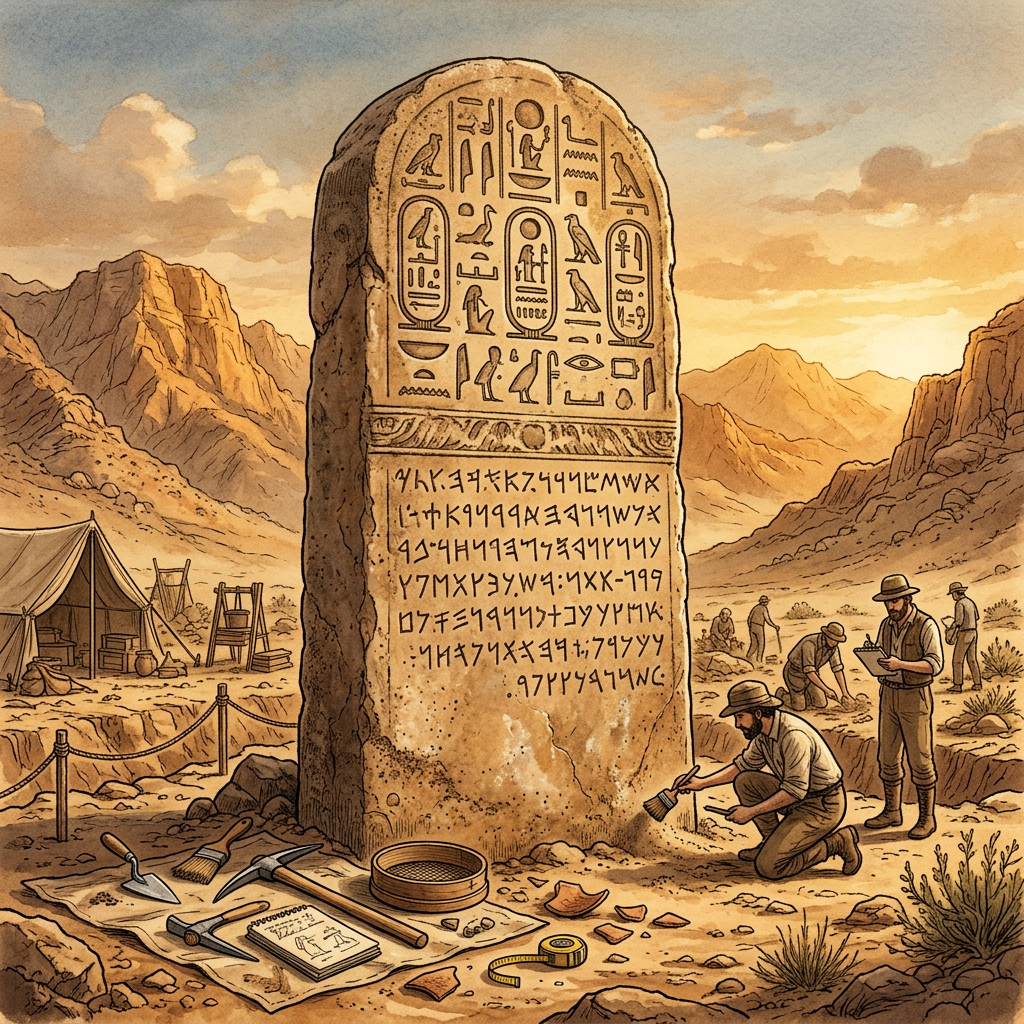
The discovery of a series of bilingual stelae in the Kabul Valley has revealed a profound synthesis of Greek and Vedic thought regarding the 'Ethics of Spiritual Discipline'. The inscriptions, written in both Greek and Brahmi scripts, date to the 2nd century BCE and record a dialogue between a local sage and an Indo-Greek official. The text explores the parallels between the Greek concept of 'Askēsis' and the Vedic practice of 'Tapas,' arguing that both are essential for the attainment of wisdom and civic virtue.
This find is particularly significant as it provides documented evidence of trans-continental philosophical exchange during the Hellenistic period. The stelae suggest that ancient thinkers were actively seeking common ground between their traditions, specifically in the realms of self-mastery and ethical conduct. Researchers believe this discovery will prompt a re-evaluation of the influences that shaped early Stoicism and late-Vedic moral philosophy.