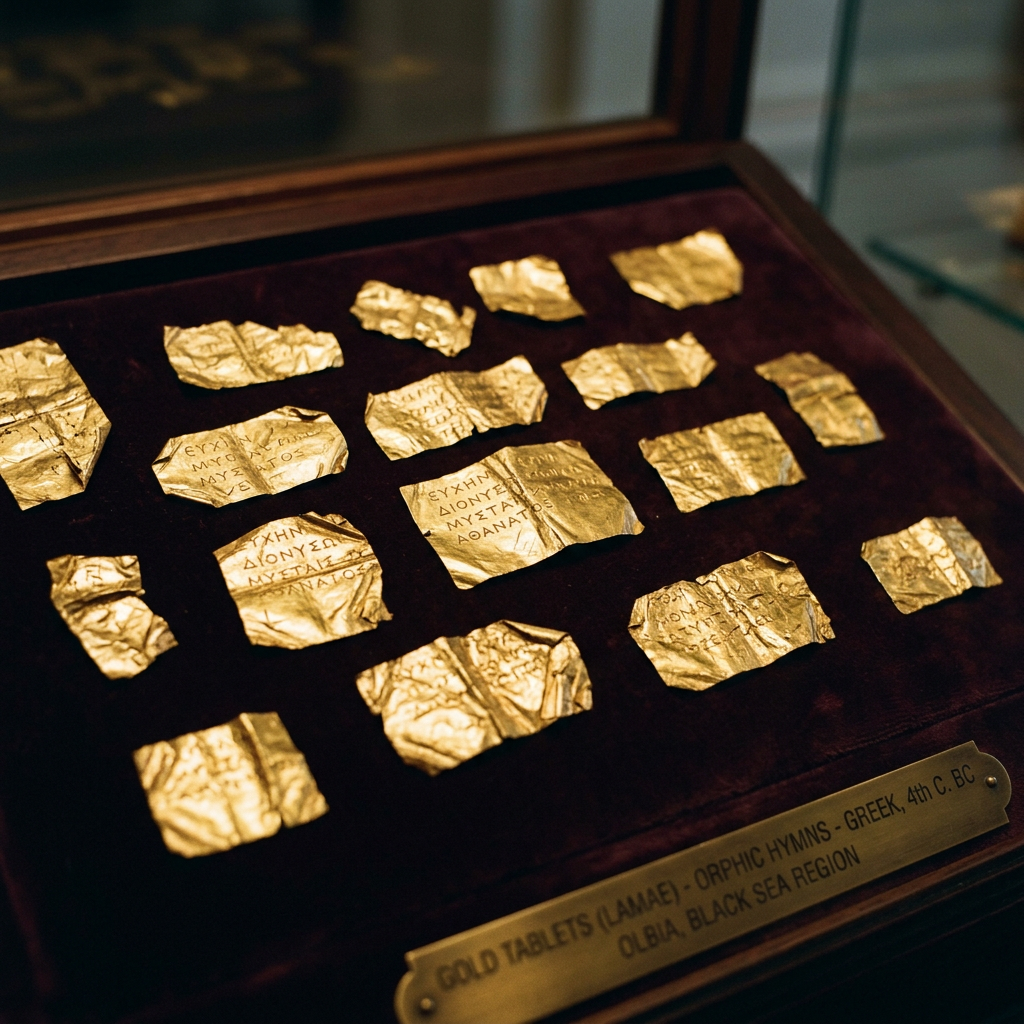
A remarkable set of Orphic gold tablets has been recovered from a tomb in Macedonia, offering new insights into a 4th-century BCE 'Philosophy of Transmigration'. These thin gold leaves, inscribed with instructions for the deceased, detail the journey of the soul and its eventual liberation from the 'cycle of grief.' The texts emphasize a moral dualism and a rigorous ethical code that mirrors contemporary concepts of 'Samsara' and 'Moksha' found in ancient Indian wisdom traditions.
Scholars are particularly intrigued by the tablets' focus on the purity of the soul as a prerequisite for divine union. The discovery has reignited scholarly debate over the potential links between Orphic mysteries and the Upanishadic teachings that were filtering into the Mediterranean world at the time. This find provides crucial archaeological evidence for the existence of sophisticated, non-materialist philosophies in classical Greece that shared significant commonalities with Eastern traditions.