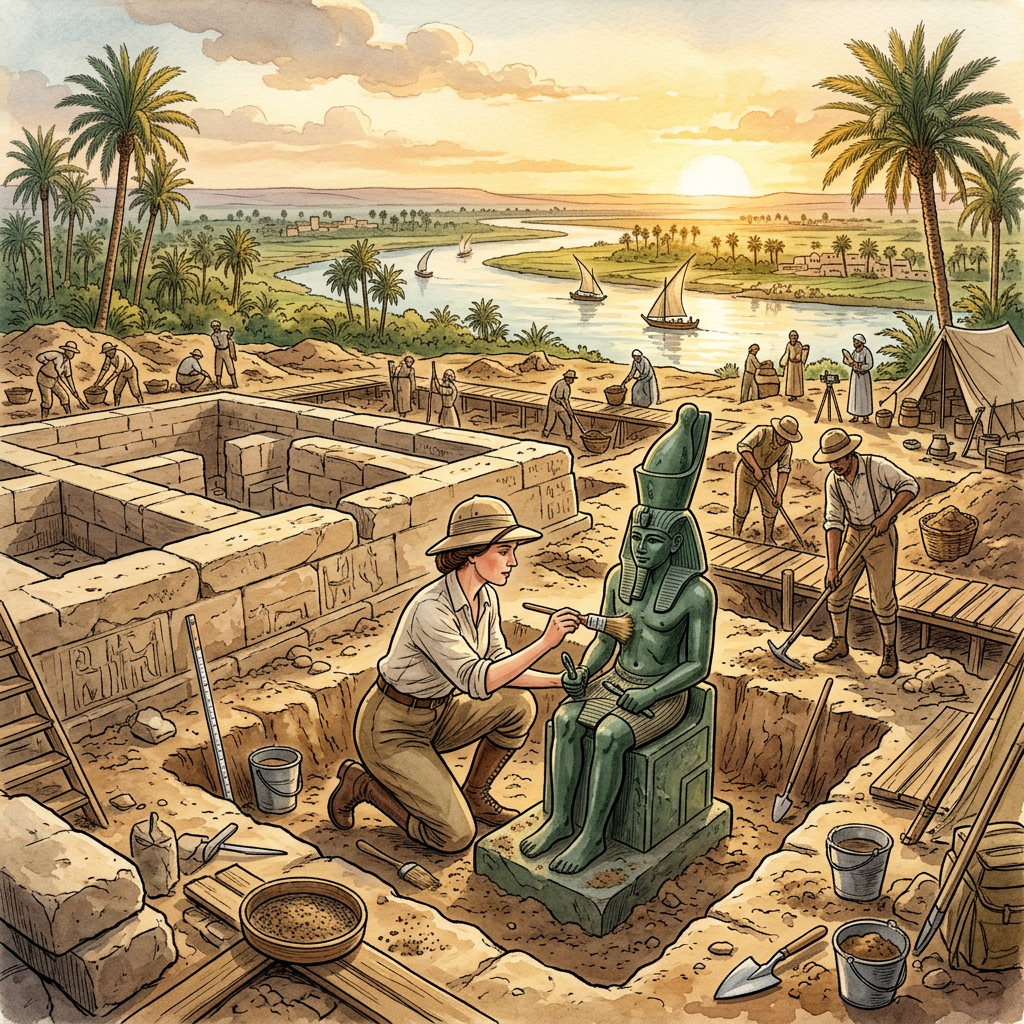
Archaeologists working in the northeastern Nile Delta at the site of ancient Pi-Ramesses have announced the discovery of a significant temple dedicated to Geb, the ancient Egyptian god of the Earth. The structure, which dates back to the New Kingdom period, was identified during a geophysical survey that revealed a massive limestone foundation and a series of interconnected ritual chambers. This discovery is particularly notable for its unique architectural layout, which includes a sunken central courtyard designed to represent the fertile primordial mound.
Inside the inner sanctum, the team unearthed two exceptionally well-preserved green-schist statues of the deity, depicted in his traditional reclining position. The walls of the temple are adorned with vibrant reliefs showing the Pharaoh presenting offerings of grain and precious stones to the god, emphasizing Geb's role in the agricultural prosperity of the region. Preliminary analysis of the inscriptions suggests that the temple served as a primary site for harvest festivals and geological rituals for nearly three centuries.