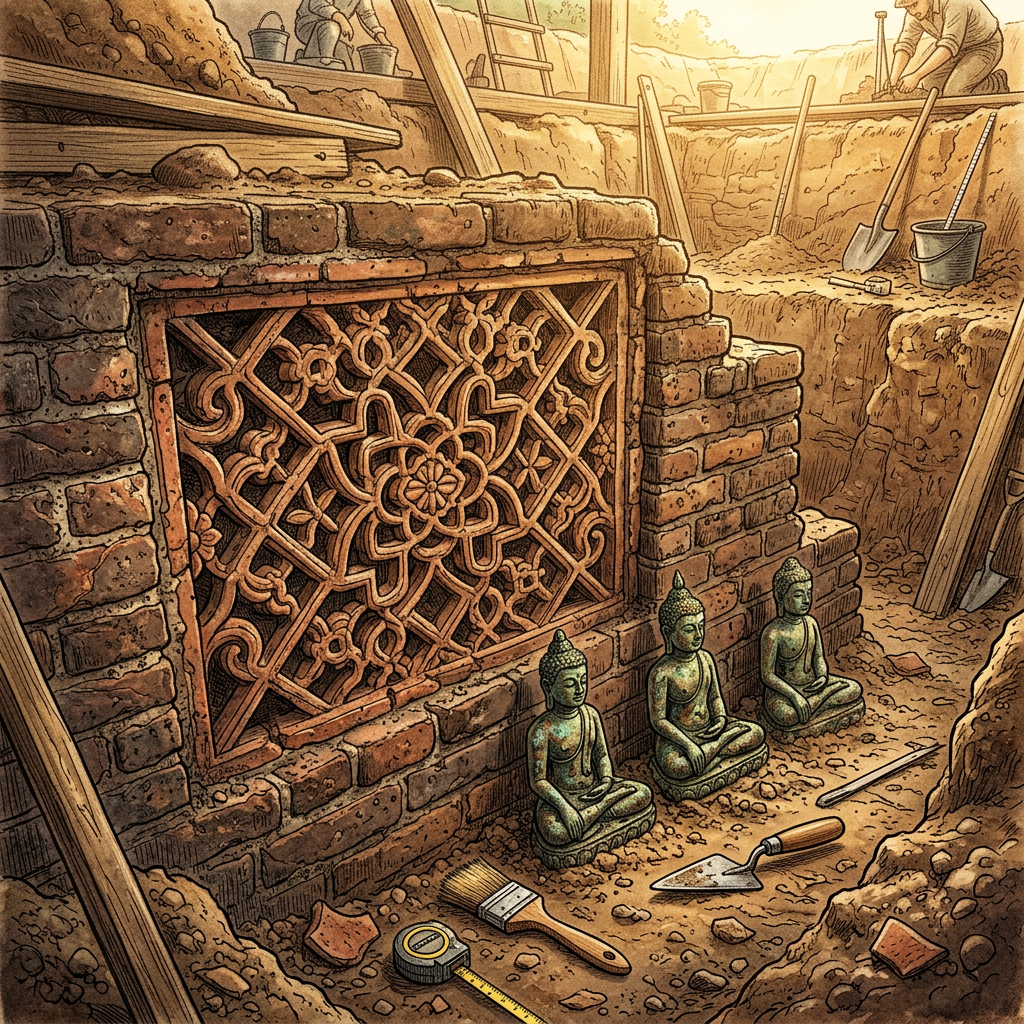
Archaeologists in Myanmar have uncovered a previously unknown Buddhist temple in the Central Dry Zone, dating back to the early Pagan Empire (late 9th to 11th centuries). The structure was found near the outskirts of a modern village during land-leveling work. Unlike the typical brick-and-stucco temples of Bagan, this site features a foundation reinforced with a sophisticated terracotta-lattice network, likely designed to provide structural stability in the region's sandy, earthquake-prone soil.
Excavations have revealed a wealth of cultural artifacts, including several small bronze Buddha figures and fragments of mural paintings depicting scenes from the Jataka tales. The temple’s layout suggests it was part of a larger monastic complex that may have served as a center for forest-dwelling monks. Conservationists are now working to stabilize the delicate terracotta foundations, which are considered a masterpiece of early Southeast Asian seismic engineering.