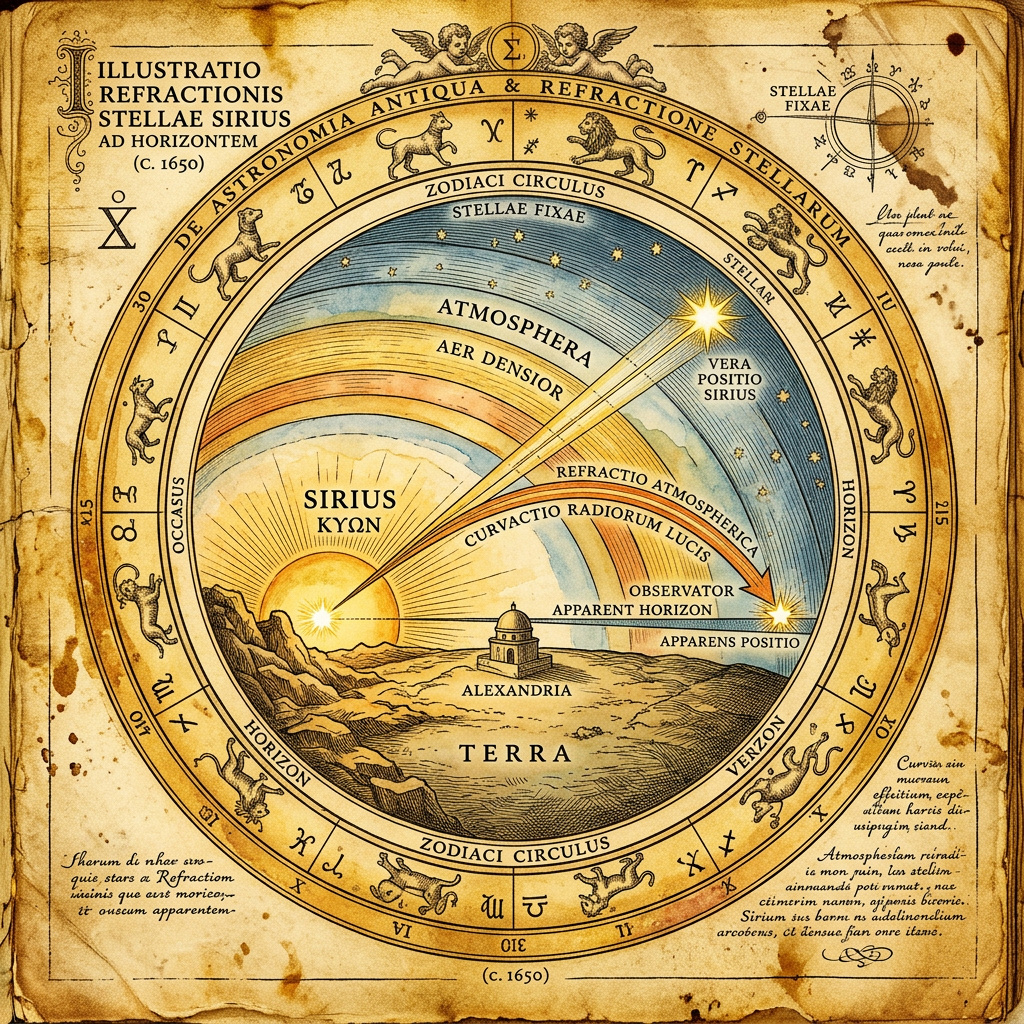
A computational study of the 10th-century Siddhanta-Tilaka manuscript has uncovered a set of complex algorithms dedicated to calculating the apparent displacement of the star Sirius near the horizon. The research, conducted by astronomical historians, demonstrates that ancient Indian astronomers had developed a numerical correction factor for atmospheric refraction that is remarkably accurate when compared to modern physical constants.
The study highlights the use of an iterative approximation method that accounts for humidity and temperature variations at high altitudes. This level of observational precision explains how medieval Indian scholars were able to maintain such highly accurate calendars and predict heliacal risings with sub-degree accuracy even under varying atmospheric conditions.