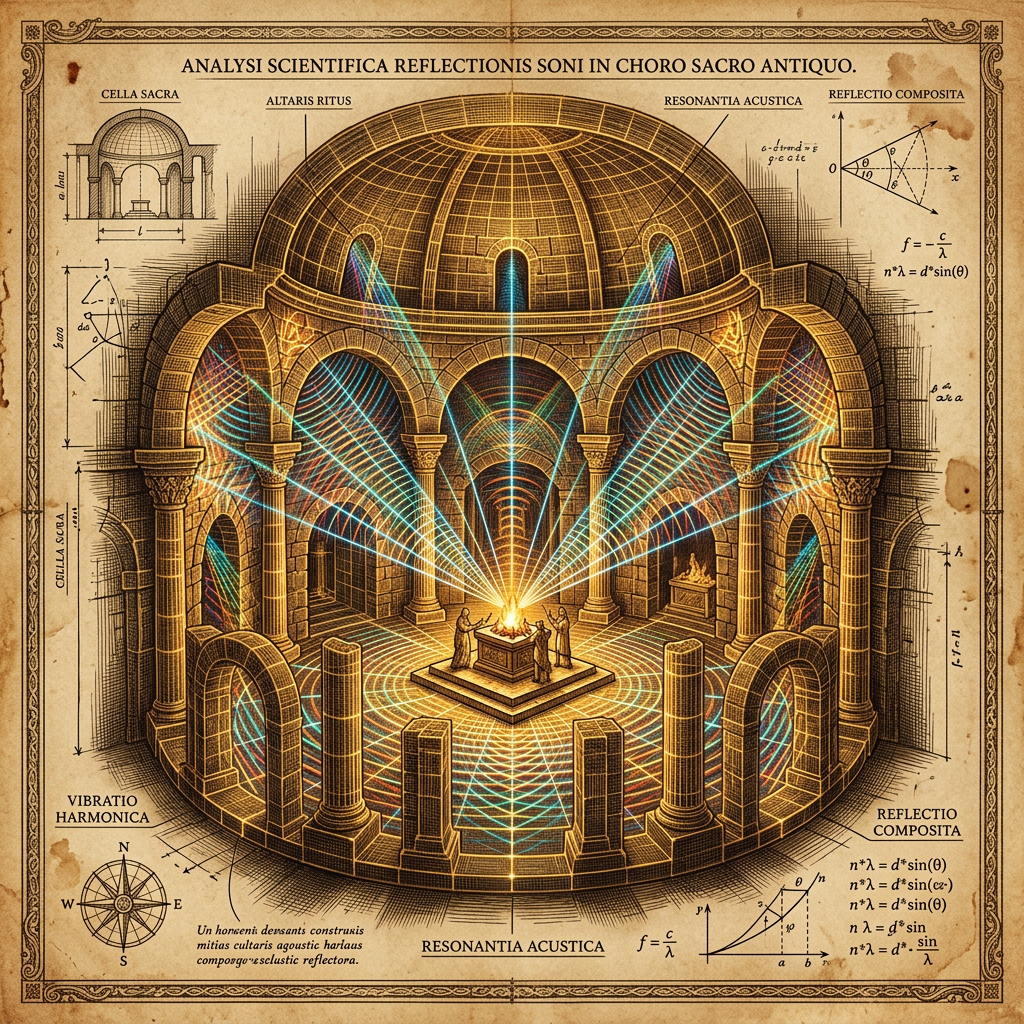
A new study in the Indian Journal of History of Science has applied computational acoustic modeling to the geometric descriptions of ritual chambers found in the 2nd millennium BCE Kathaka Samhita. The research identifies precise mathematical ratios designed to optimize non-linear sound reflection and resonance during Vedic chanting, effectively turning the architecture into a giant acoustic filter.
The analysis suggests that ancient architects used recursive geometric series to construct parabolic surfaces that amplified specific vocal frequencies while dampening low-frequency echoes. This discovery points to a highly developed understanding of wave interference and architectural acoustics that predates formal Western theories by several millennia.