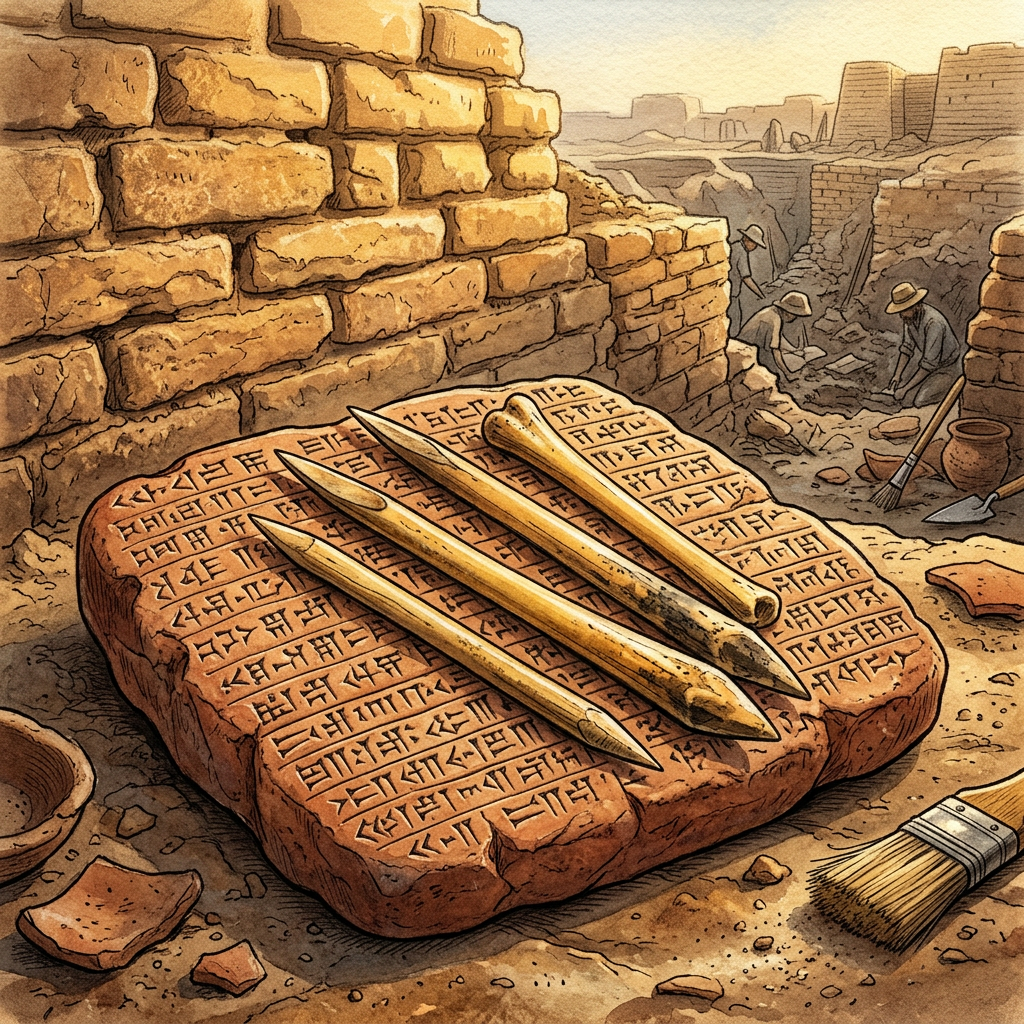
Excavations in the residential quarter of Ancient Ur have brought to light a unique cuneiform archive belonging to a guild of stylus-carvers. These artisans were tasked with the manufacturing of precision writing instruments made from bone and reed. The find includes instructional tablets describing various chemical treatments and heat-exposure techniques used to harden the bone tips for increased durability.
The archive, dating to the Neo-Sumerian period, lists hundreds of 'stylus grades' tailored for different types of clay, from soft administrative tablets to high-density monumental records. This discovery highlights the industrial precision behind the Sumerian writing system and the existence of a highly specialized support industry that maintained the tools of the imperial bureaucracy.