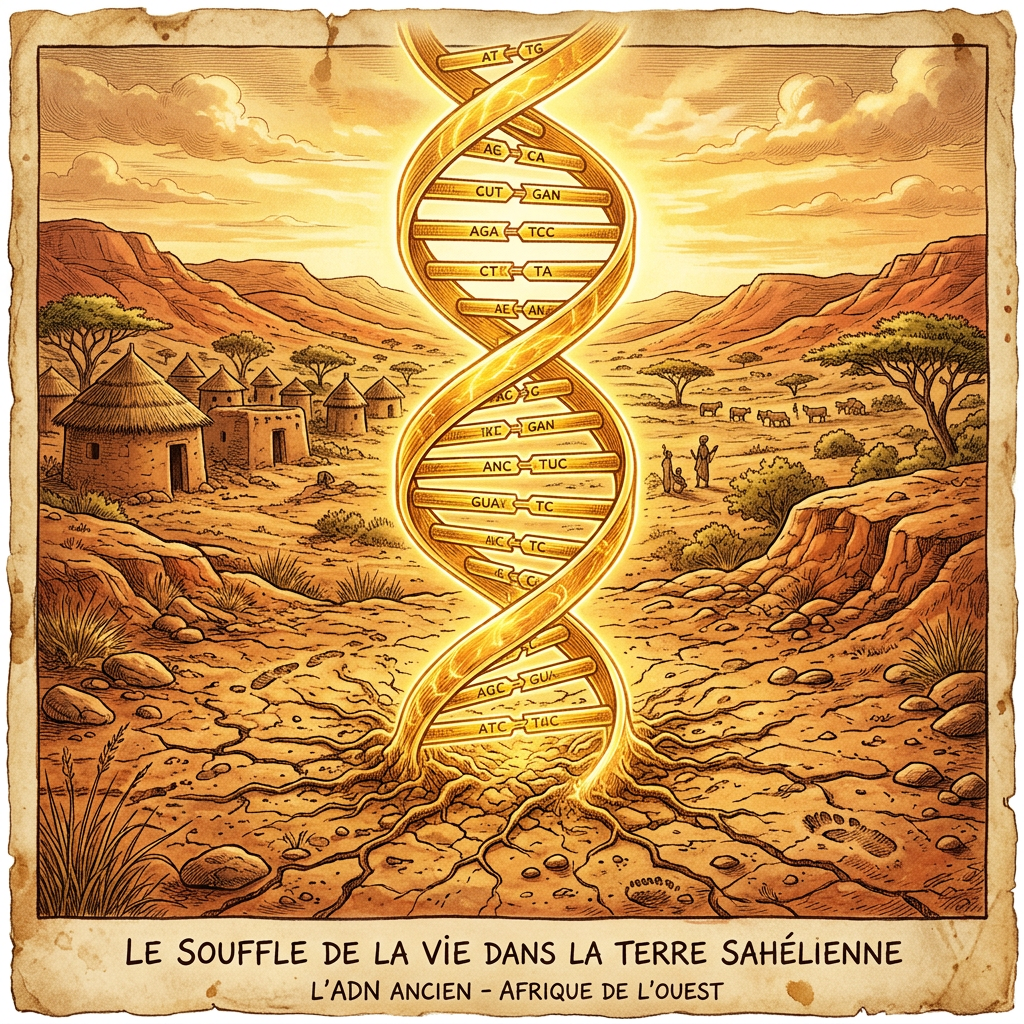
A large-scale paleogenomic analysis published in Nature Research has mapped the genome of 11,000-year-old remains recovered from the Senegal River Valley. The study identifies the earliest known genetic adaptation to high-nitrate groundwater, a persistent environmental challenge in the West African Sahel. The researchers discovered specialized mutations in genes associated with oxygen transport and nitrate metabolism, which allowed early Holocene foragers to thrive despite the naturally high salinity and mineral content of local aquifers.
This discovery provides critical evidence for how early human populations in Africa adapted to specific localized environmental stressors. The findings also suggest that these ancient hunter-gatherer groups possessed a high degree of ecological specialized resilience, enabling them to occupy niches that would have been physiologically detrimental to unadapted populations during the onset of the 'Green Sahara' period.