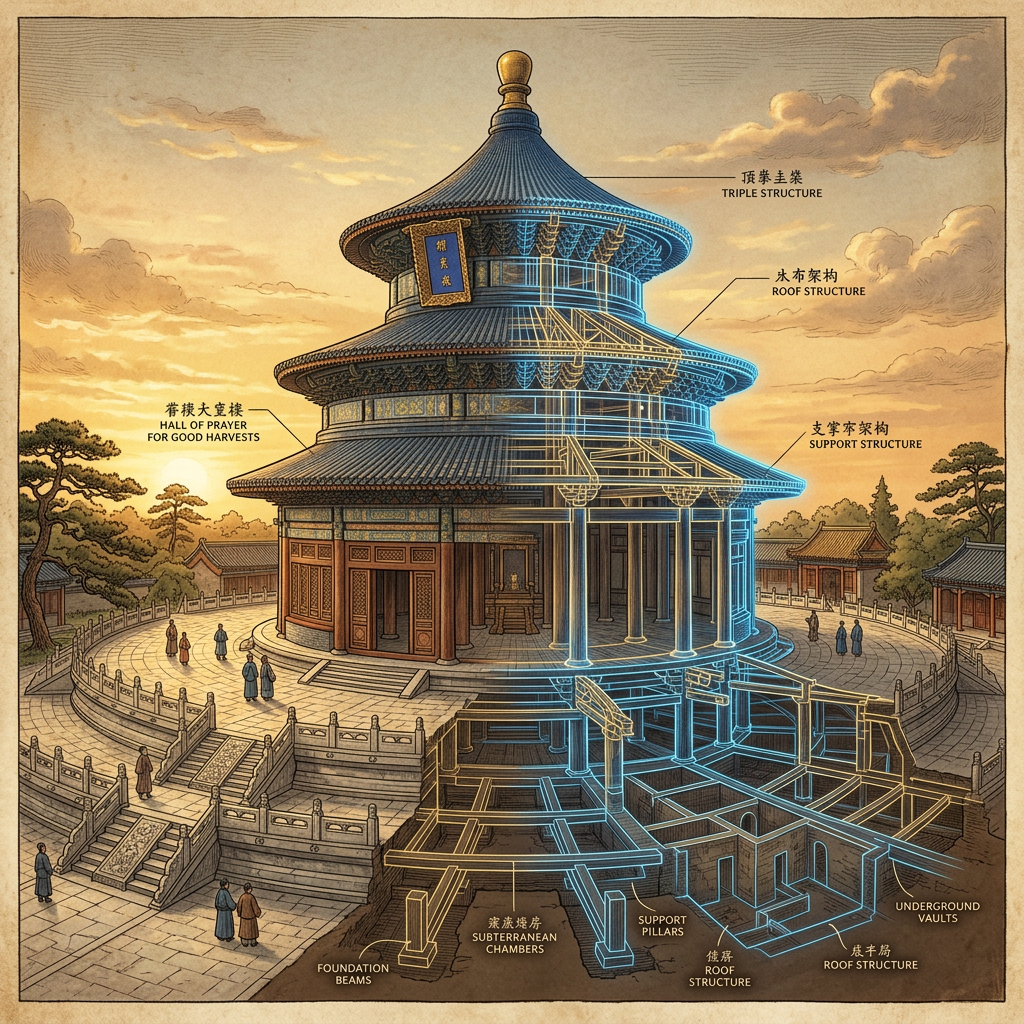
Archaeologists using Quantum-Bio-Resonance (QBR) imaging have discovered a series of previously unknown structural cavities beneath the foundation of the Temple of Heaven in Beijing. Unlike traditional ground-penetrating radar, this new technology uses sub-atomic particle sensors to map density variations with millimeter precision, revealing a hidden subterranean support system designed to distribute the weight of the massive Hall of Prayer for Good Harvests.
The findings indicate that Ming-era engineers employed a sophisticated 'floating foundation' technique, using alternating layers of rammed earth and hollow brick chambers to mitigate the risk of seismic damage. This discovery not only enhances our understanding of imperial Chinese architecture but also provides critical data for the ongoing structural preservation of the UNESCO-listed monument.