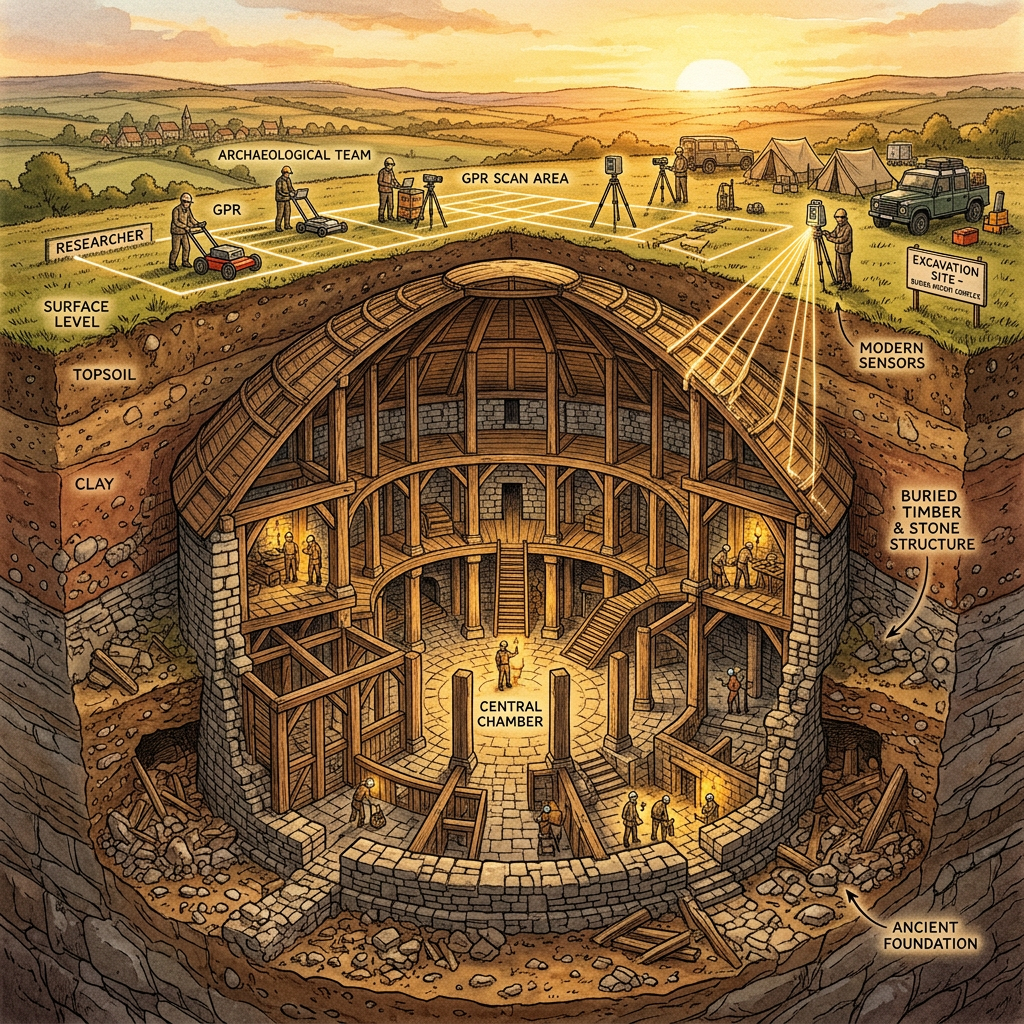
Archaeologists in Romania have used muon tomography to detect a massive, 6,000-year-old circular megastructure buried beneath a prehistoric mound near Iași. Measuring over 120 meters in diameter, the building is believed to be a ritual assembly hall associated with the Cucuteni-Trypillia culture. Unlike the typical mud-and-wattle houses of the era, this structure appears to have been reinforced with massive oak beams and limestone slabs.
Preliminary core samples have revealed a central hearth and a floor covered in polychrome ceramic shards featuring intricate geometric patterns. Researchers suggest this site may have been a regional pilgrimage center, indicating a level of social organization and architectural ambition previously unrecognized in Chalcolithic Europe.