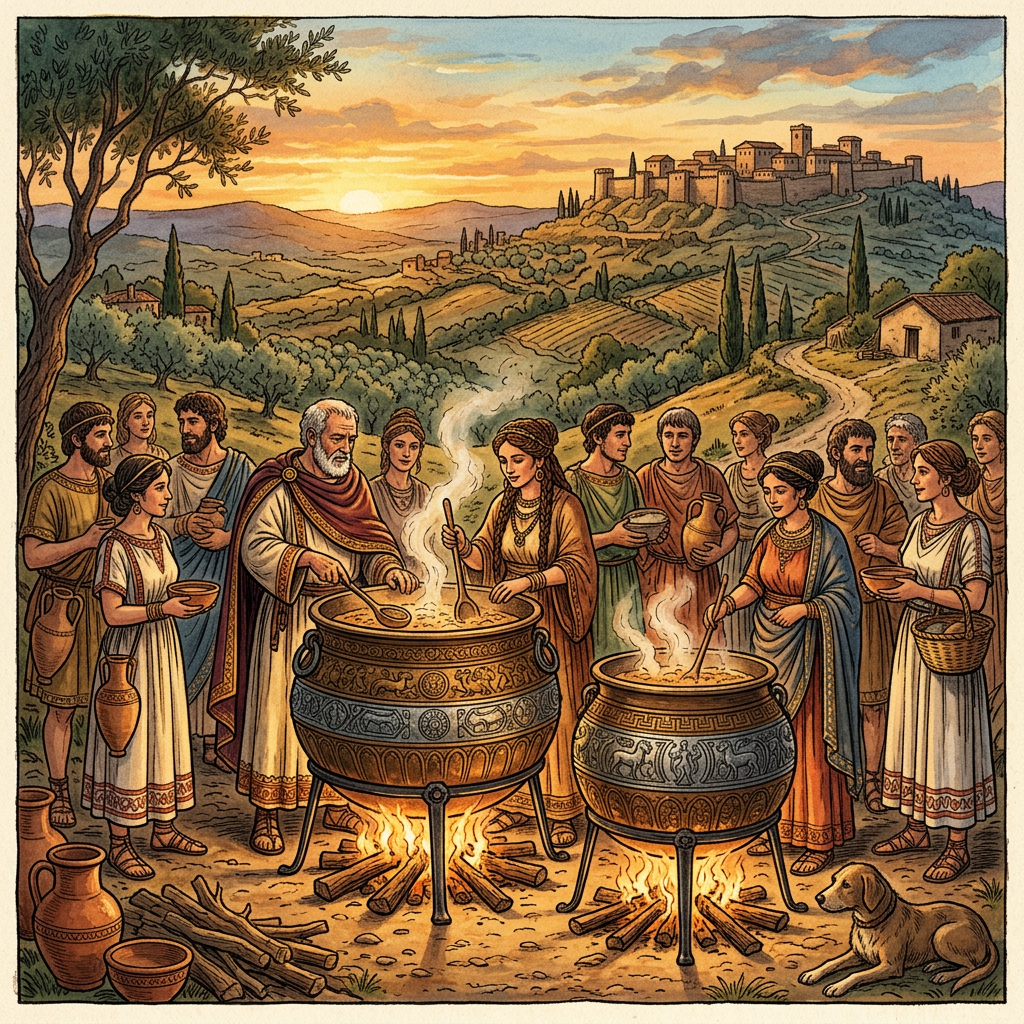
Recent excavations at the site of Populonia have brought to light three tin-bound ritual cauldrons used during the 7th century BC. These large vessels were found buried in a circular pattern beneath the foundation of a newly discovered rural shrine. Chemical residue analysis has identified traces of a spelt-and-honey porridge, suggesting the cauldrons were used to prepare communal meals for the 'Festival of the First Sprout', an early Etruscan celebration of agricultural rebirth.
The use of tin as a binding agent is particularly significant, as it highlights the advanced metallurgical trade networks of the era. Archaeologists believe that this festival was a precursor to later Roman agricultural rites, focusing on the protection of young crops from late spring frosts. The presence of small clay figurines shaped like budding grain stalks further reinforces the ceremonial nature of the find, offering a rare glimpse into the domestic and religious life of the Etruscan hinterland.