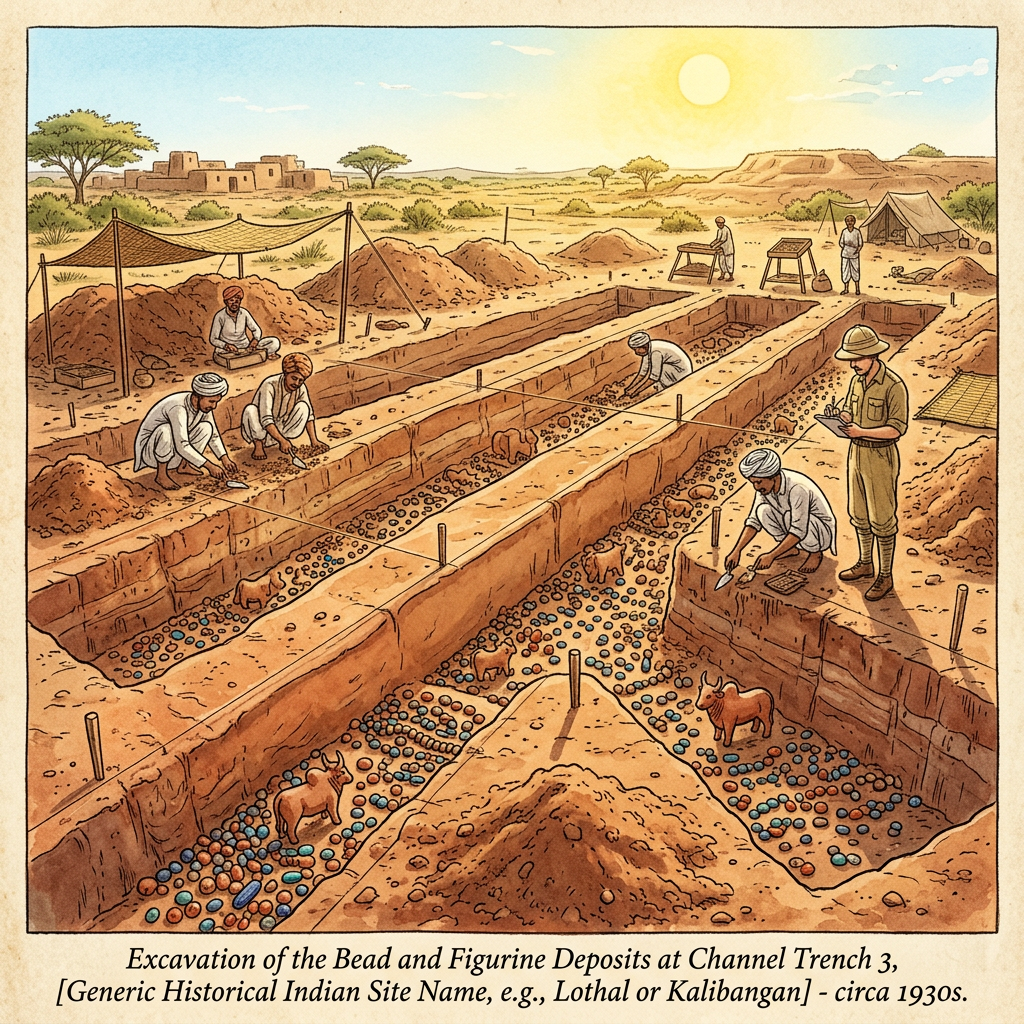
In the southern Deccan Plateau of India, a team of researchers has discovered a series of terracotta-lined offering trenches at a Megalithic burial and ritual site. The trenches, dated to 1000 BC, contain high concentrations of beads made from semi-precious stones and remnants of organic fibers that match early varieties of wild marigolds. This evidence points toward a 3,000-year-old tradition of 'Cattle-Adornment' festivals, where livestock were decorated and paraded during the transition between the dry and monsoon seasons.
The findings suggest that the ritual was not only a spiritual act to invoke prosperity but also a social gathering that reinforced community bonds through shared labor and celebration. The discovery of miniature clay bulls within the trenches confirms the central role of cattle in the spiritual hierarchy of the region's early pastoralist societies. This research provides a critical link between prehistoric pastoral rites and the vibrant livestock festivals that continue to be celebrated across rural India today.