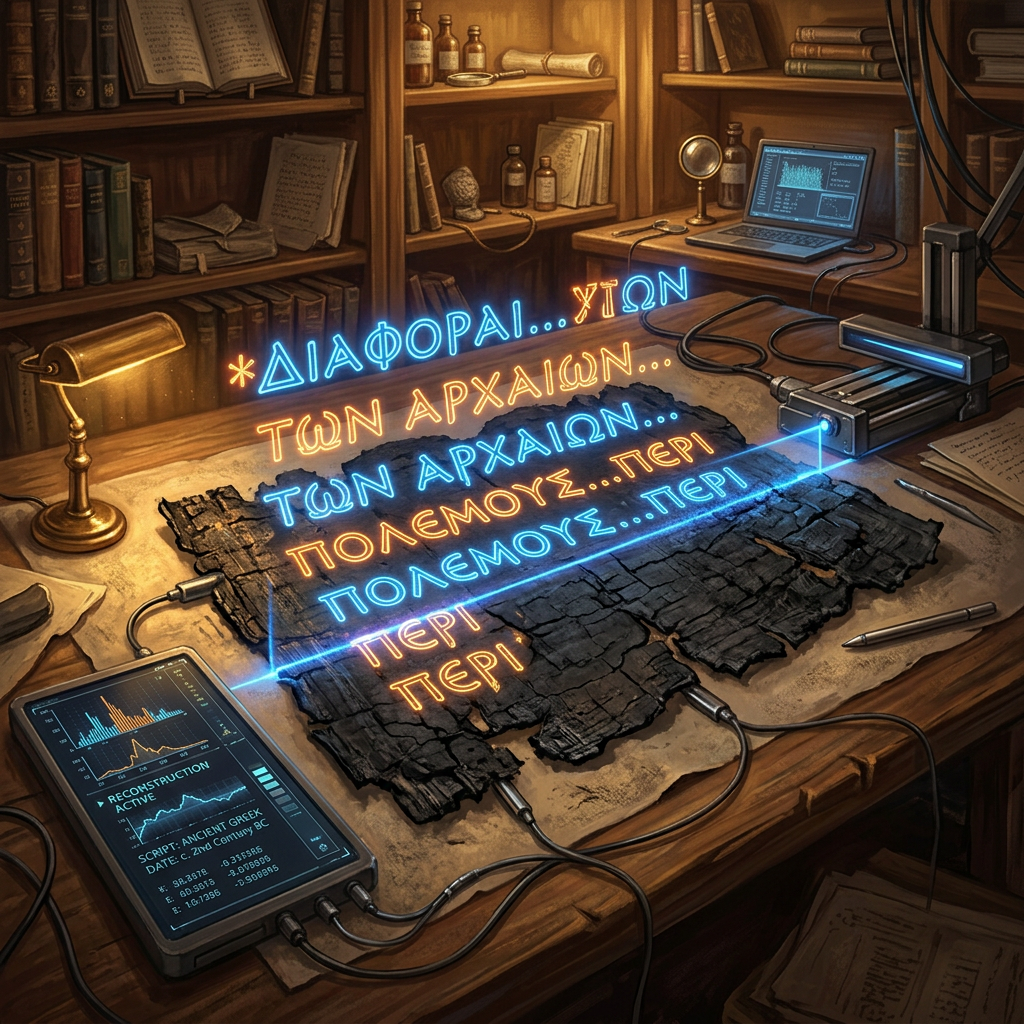
Using advanced X-ray phase-contrast tomography and AI-driven character recognition, researchers have successfully read a previously illegible section of a carbonized scroll from the Villa of the Papyri in Herculaneum. The text contains a series of logical syllogisms that appear to be a Roman translation of an earlier Greek treatise on The Logic of Chance and Moral Consequence. Crucially, the AI identified technical terms that correspond directly to early Vedic dialectics, suggesting that the author was influenced by Indian skeptical philosophies brought to the Mediterranean by trade missions.
The deciphered fragments explore a 'Philosophy of Probabilistic Truth', arguing that while absolute certainty is impossible, ethical living can be guided by a 'calculus of virtue'. This discovery is being hailed as a major breakthrough in the study of cross-continental philosophical influences during the late Republic period, providing a rare glimpse into the intellectual pluralism of the ancient world before the rise of the Roman Empire.