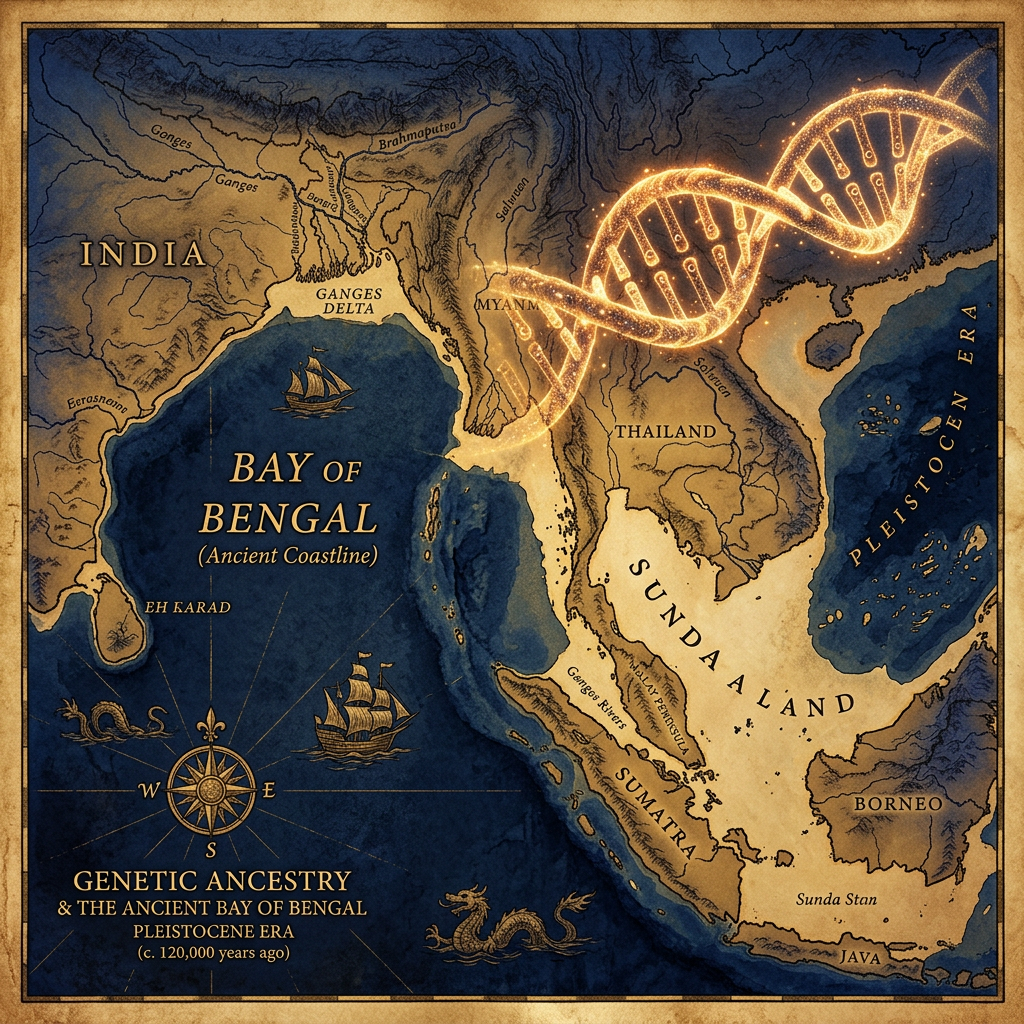
An international team of geneticists has published a landmark paper in Nature Research detailing the genomic analysis of human remains found in submerged Pleistocene caves off the eastern coast of India. The study identifies a previously unknown lineage of maritime foragers who possessed a unique genetic adaptation to high-nitrate coastal environments, likely a result of specific dietary dependencies on deep-sea flora.
This paleogenomic breakthrough indicates that these ancient populations had successfully colonized the Bay of Bengal's littoral zones nearly 5,000 years before the rise of the first known agricultural societies in the region. The findings challenge current models of human migration into South Asia by suggesting a much deeper history of maritime specialization.