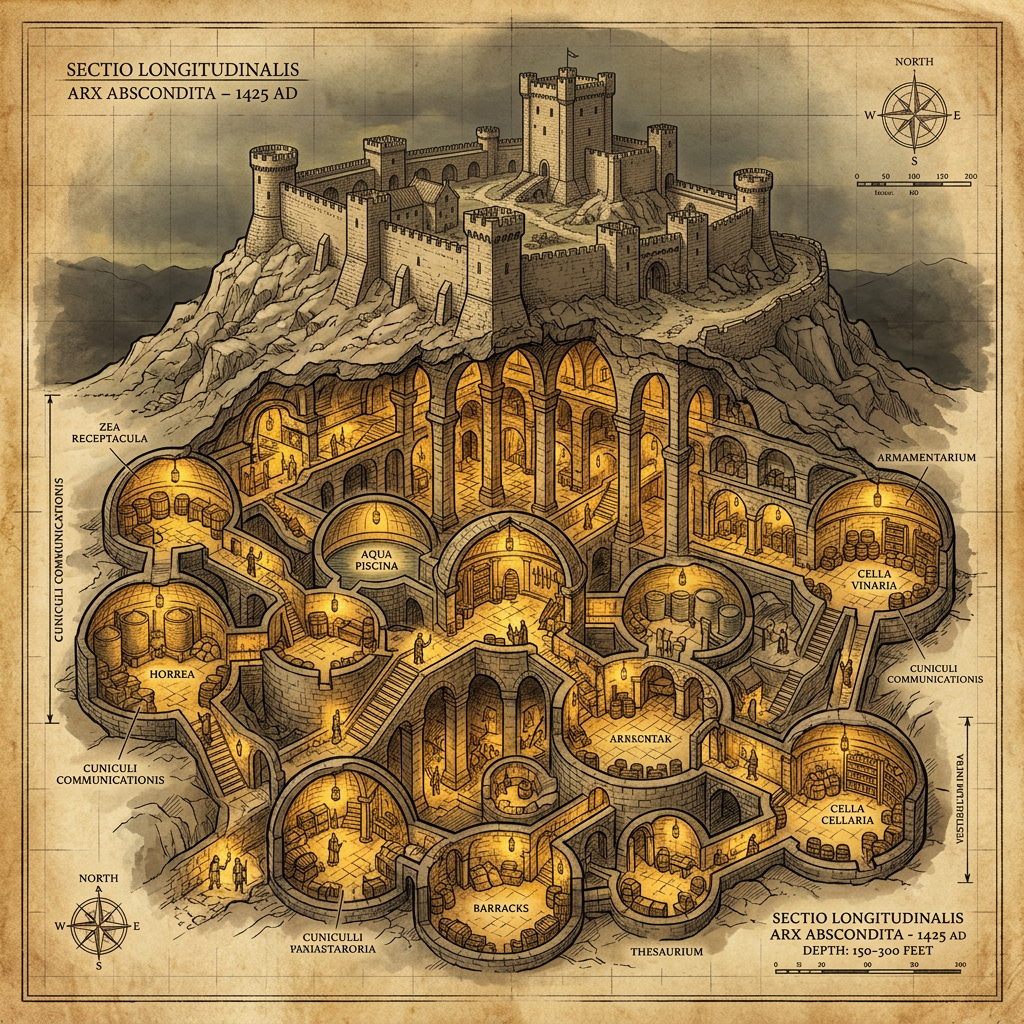
Scientists utilizing a new generation of Muon-Sensing AI have discovered a massive subterranean complex beneath the Hittite capital of Hattusa in modern-day Turkey. The non-invasive scan revealed a series of interconnected, moisture-controlled silos capable of storing enough grain to sustain the city's population for over a decade, highlighting the Hittite Empire's advanced strategies for famine prevention.
Unlike previous discoveries in the region, this labyrinth appears to have utilized a sophisticated thermal-ventilation system that harnessed the natural cooling properties of the bedrock. This technological innovation suggests that the Hittites were far more advanced in their engineering of permanent food security than previously believed, providing a model for how ancient civilizations mitigated the impacts of prolonged drought.