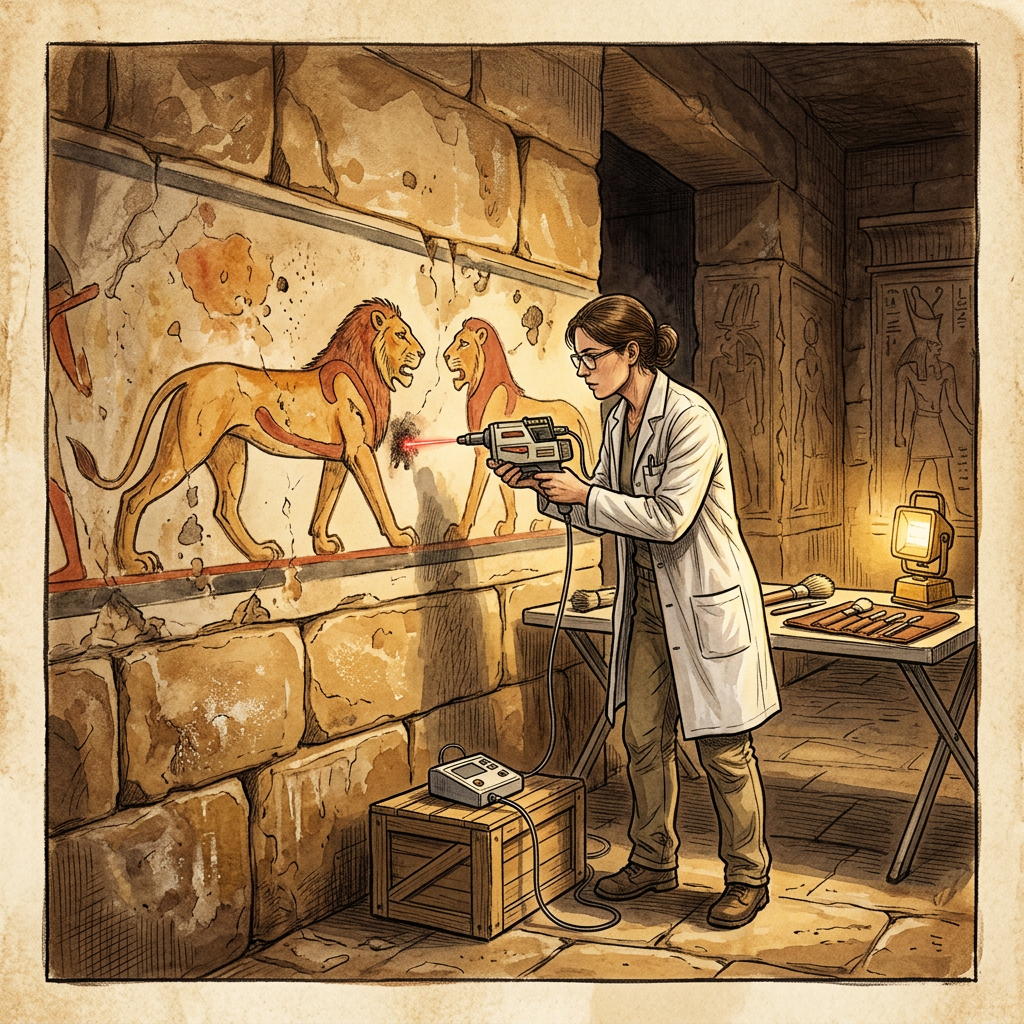
Conservationists in Italy have successfully tested a revolutionary 'Molecular-Grafting' nanotechnology to halt the rapid deterioration of the frescoes in the 'Tomb of the Roaring Lions,' the oldest painted tomb in the Etruscan world. The treatment uses a bio-compatible nano-grout that penetrates the stone on a molecular level, binding the pigment to the bedrock without changing the visual texture or permeability of the ancient artwork.
The project, led by the Central Institute for Restoration in Rome, addresses the chronic problem of 'calcite blooming' caused by humidity changes. If successful over the long term, this technology could be deployed to save hundreds of at-risk archaeological sites globally where traditional surface coatings have failed to prevent the disintegration of fragile mineral-based pigments.