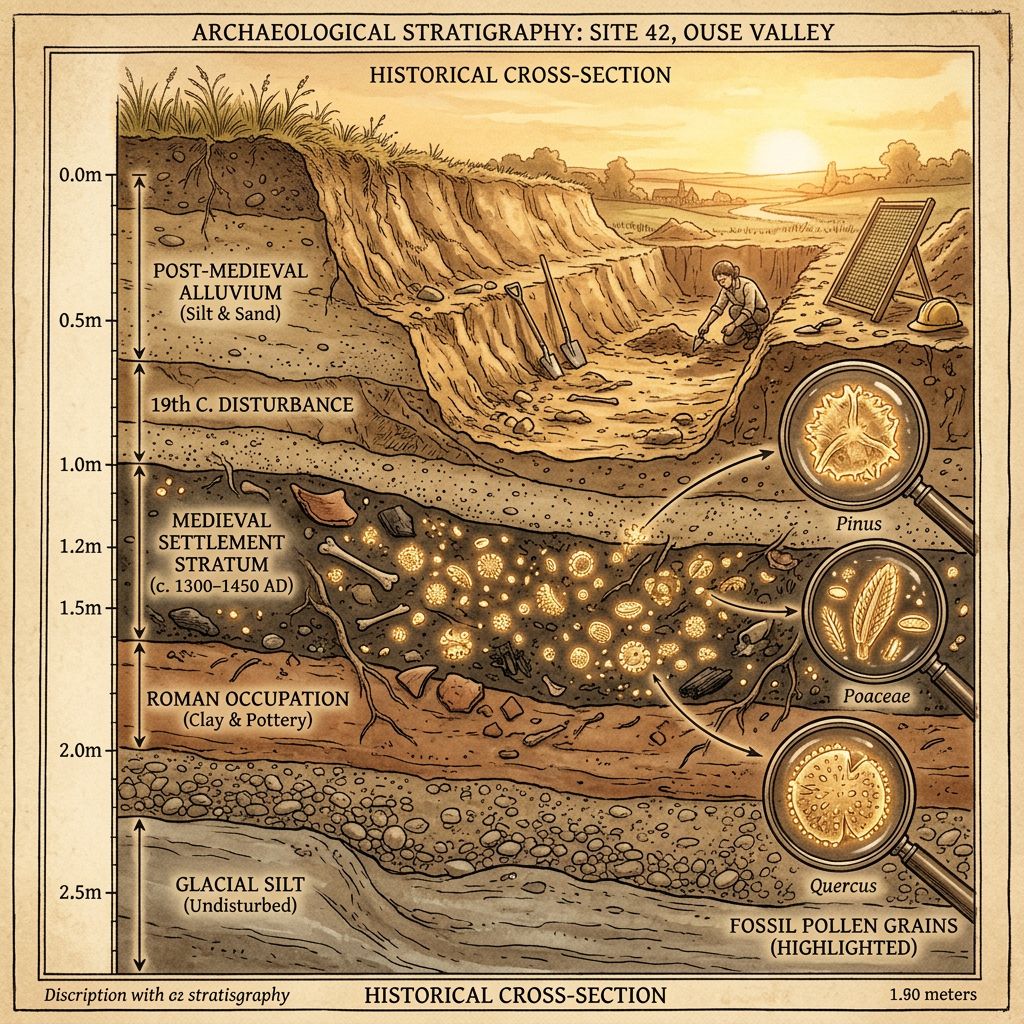
A team of climate archaeologists has published a groundbreaking study using deep-core sediment samples from the Rosetta branch of the Nile Delta. By analyzing fossilized pollen and micro-charcoal trapped in these layers, the researchers identified a 150-year period of exceptionally stable and predictable flooding around 3100 BCE, exactly coinciding with the unification of Upper and Lower Egypt under the First Dynasty.
The study suggests that this 'Environmental Window of Opportunity' allowed early Egyptian administrators to perfect the first state-wide grain-taxation systems. This new data provides a critical environmental context for the rapid emergence of Egyptian bureaucracy, showing that the Old Kingdom's political consolidation was fueled by a unique climatic lull in the usually volatile African monsoon cycle.