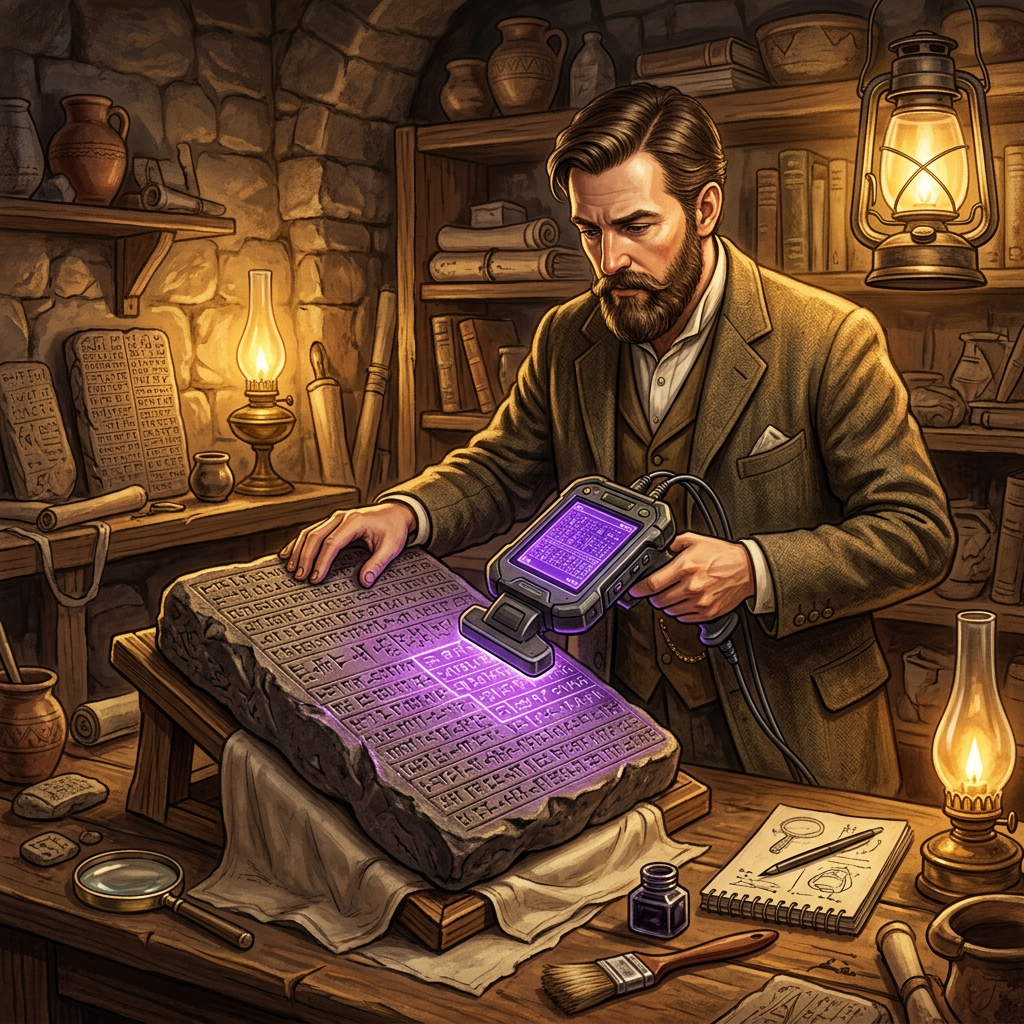
Conservation scientists have announced a breakthrough in heritage technology using Atomic-Resonance Spectroscopy to detect microscopic traces of the legendary Tyrian Purple pigment on 2,500-year-old Phoenician votive stelae. The artifacts, which appeared colorless to the naked eye, were scanned using this non-destructive method to reveal the original vibrant hues once used to honor deities. The pigment, derived from the Murex sea snail, was more valuable than gold in antiquity and symbolized extreme wealth and status.
This innovative technology allows researchers to map the elemental composition of surface residues without taking physical samples, preserving the integrity of fragile stone surfaces. The data collected has allowed for the creation of digital reconstructions showing the stelae in their original, brightly painted state. This technique is now being adopted by museums worldwide to re-examine ancient sculptures and determine their true historical appearance.