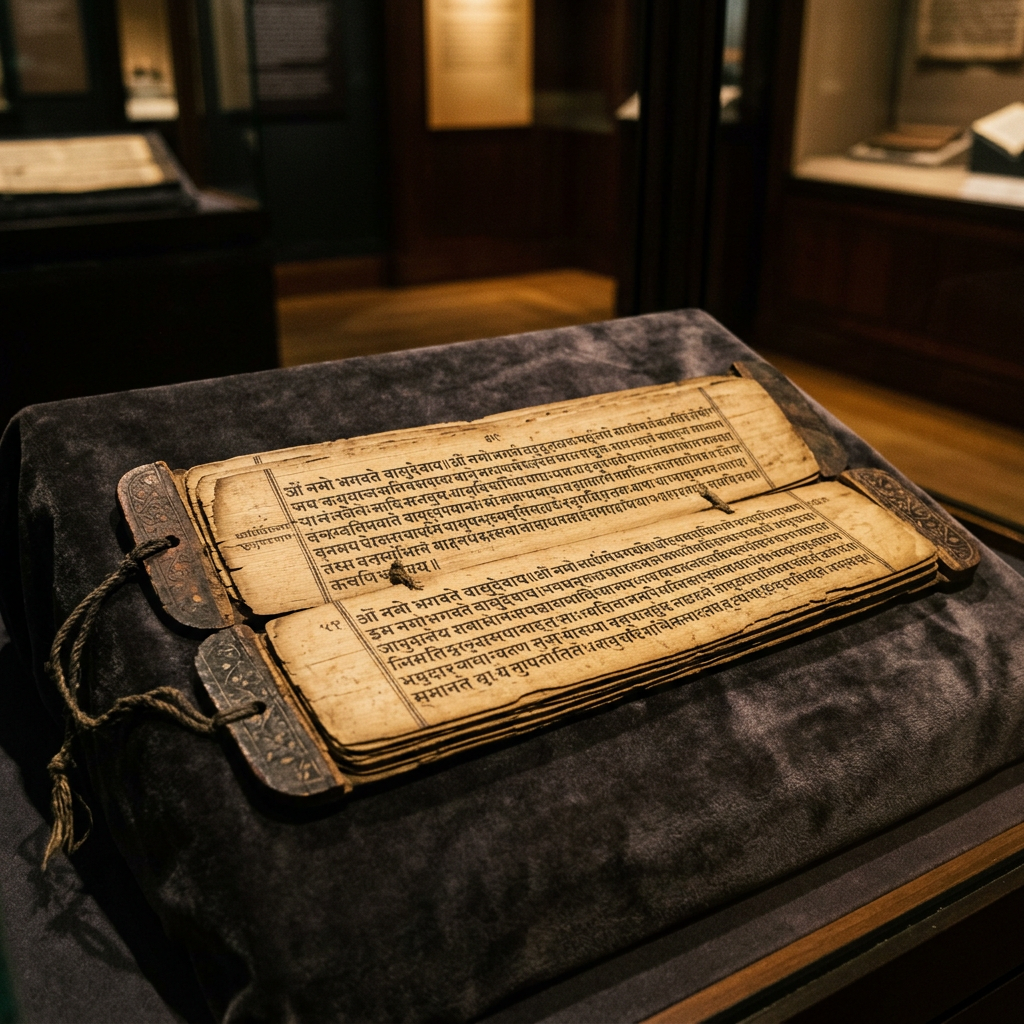
Researchers at the Heritage Research Institute in Rajasthan have uncovered a remarkably preserved palm-leaf manuscript titled the Anumana-Ratna-Sudha. Found in a sealed chest within a family's ancestral home in rural Mewar, the text dates back to the mid-11th century. It offers a previously unknown bridge between the Nyaya and Navya-Nyaya traditions, focusing specifically on the refinement of syllogistic reasoning and the validity of inference.
The text introduces the concept of Vyatireka-Vyapti, a sophisticated form of negative universal concomitance that predates later formalizations in Mithila. Scholars believe this find will necessitate a revision of the timeline for medieval Indian logic, demonstrating that rural centers in western India were hotspots of intellectual activity centuries earlier than previously recorded. The manuscript is now undergoing digital preservation to ensure its long-term survival for global scholars.