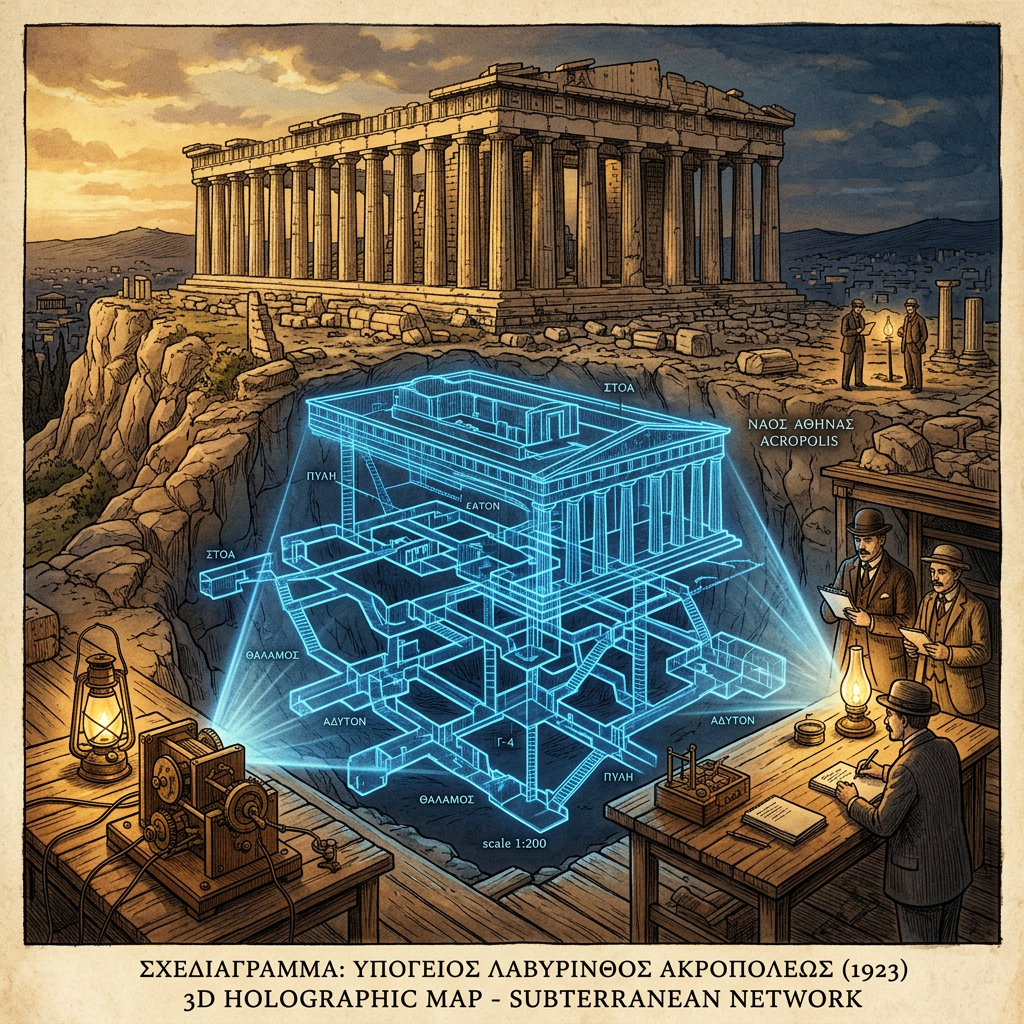
A breakthrough in non-invasive archaeology has revealed a massive, previously unknown subterranean irrigation network beneath the ancient Greek city of Cyrene in modern-day Libya. Utilizing 'Acoustic-Resonance AI', a technology that maps underground voids by analyzing sound-wave reflections, researchers identified over 15 kilometers of interconnected aqueducts and cisterns dating back to the 5th century BCE.
This discovery provides crucial insights into how Cyrene sustained its population in a semi-arid environment for centuries. The AI-driven mapping shows a sophisticated gravity-fed system that captured mountain runoff and distributed it to urban centers and agricultural terraces. Heritage officials are now using these maps to reinforce the ground above these hollow structures, protecting the city's standing ruins from potential subsidence caused by groundwater shifts.