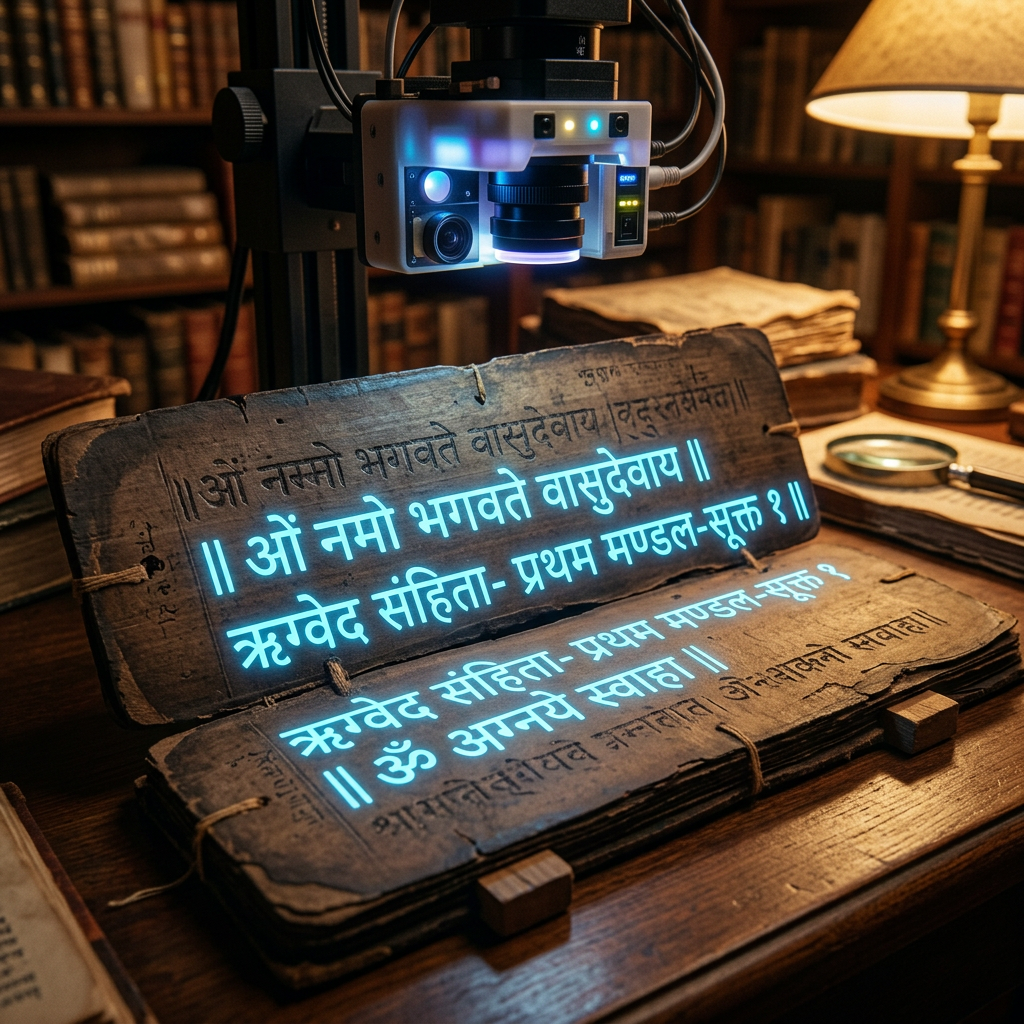
Scholars at the Center for Digital Epigraphy have utilized a new AI-enhanced multispectral imaging technique to read a series of 7th-century Proto-Grantha palimpsests found in a cave in Odisha. The hidden text reveals a lost Sanskrit treatise that details an advanced system for classifying aquatic lichens and mosses. According to the manuscript, these biological organisms were used by ancient agrarian communities as bio-indicators to determine the depth and purity of the water table before digging irrigation wells.
The treatise, titled Jala-Lakshana-Vijnana, provides a rigorous taxonomic framework, categorizing over 40 species of riparian flora based on their sensitivity to mineral concentrations. This research proves that ancient Indian scholars had developed a sophisticated form of geobotanical engineering, combining botanical observation with hydrological planning. The AI model was able to reconstruct missing segments of the text, allowing researchers to verify the accuracy of the ancient observations against modern environmental science standards.