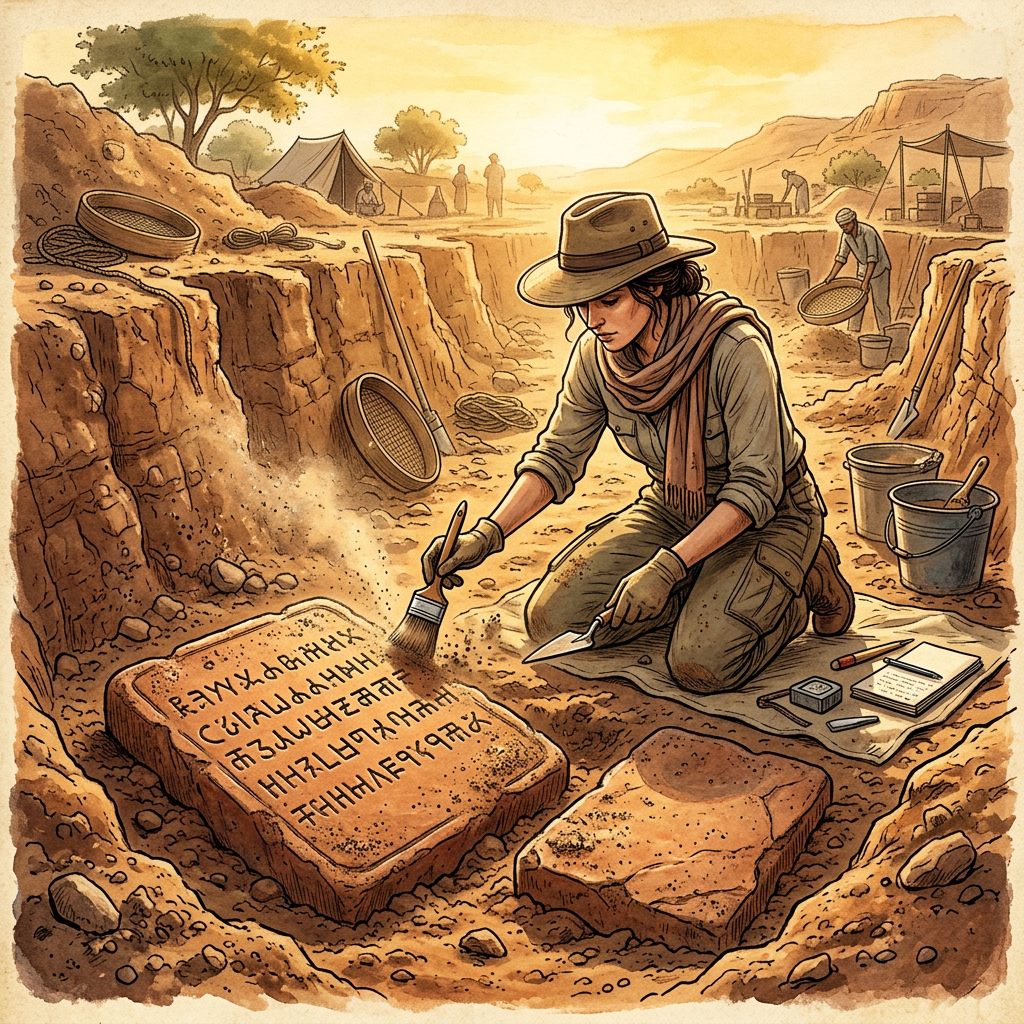
A series of inscribed terracotta tablets found at a newly excavated site in the Ghaggar-Hakra basin has revealed a lost philosophical treatise named the Rta-Anuvrata-Vada. Published by the Archaeological Survey of India, the inscriptions outline a 6th-century BCE ethical system that bridges the gap between early Vedic ritualism and the internal monism of the later Upanishadic period.
The text focuses on 'aligned conduct,' a precursor to the classical concepts of Dharma. It posits that human suffering arises from a misalignment with Rta (cosmic order) and provides a logic-based framework for social harmony. Scholars suggest these tablets provide the first concrete evidence of a formalized 'secular ethics' within the late Vedic community, focusing on environmental and civic responsibility rather than purely sacrificial mandates.