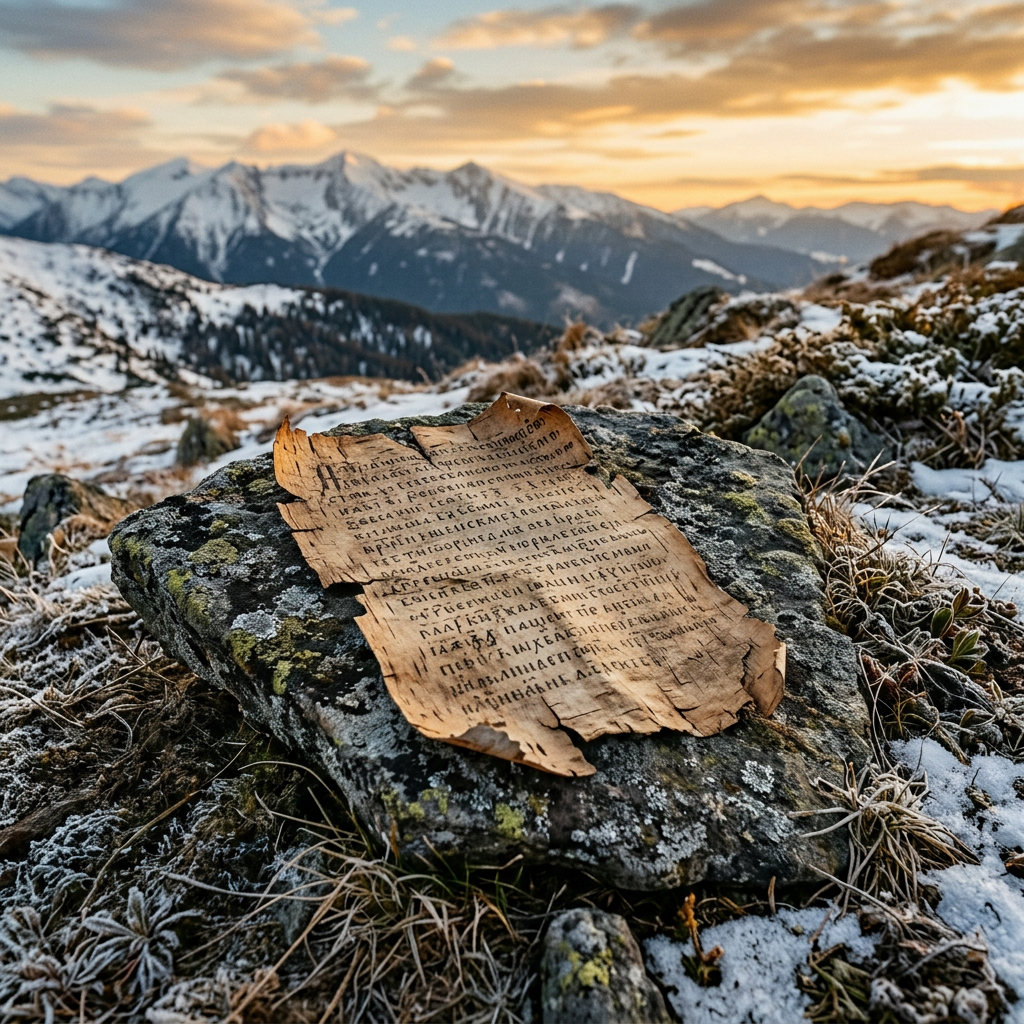
In a major breakthrough for Silk Road studies, archaeologists in the Pamir Mountains of Tajikistan have discovered birch-bark fragments containing a lost commentary on the Sama Veda. These fragments, dated to the 4th century BCE, represent the northernmost discovery of a Vedic philosophical text and suggest that Vedic metaphysics had a profound influence on Central Asian thought much earlier than previously believed.
The commentary, referred to as the Sama-Bhashya, explores the 'Metaphysics of Melodic Harmony,' arguing that the structure of musical intervals provides the foundational code for the creation of the physical world. This discovery indicates a trans-Himalayan exchange of ideas that likely influenced early Scythian and Sogdian spiritual traditions long before the spread of Buddhism in the region.