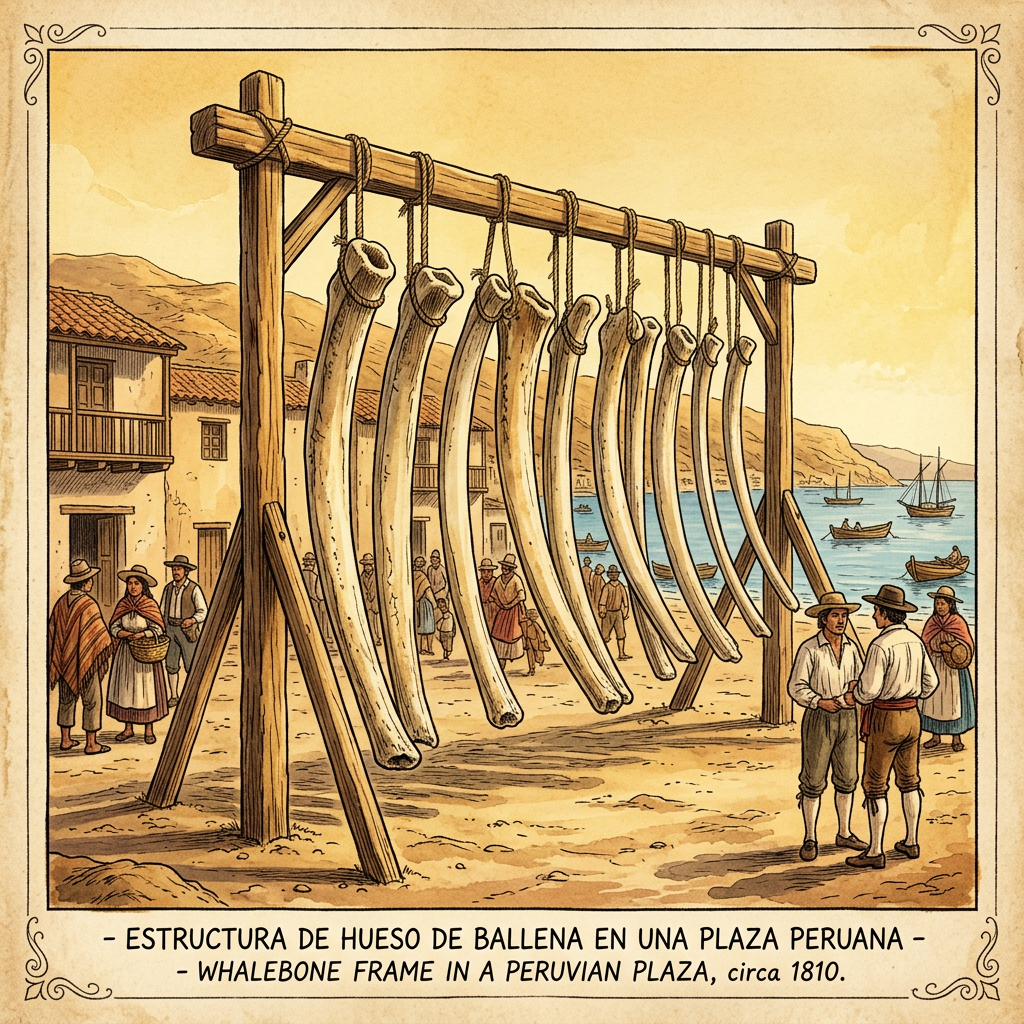
A team of maritime archaeologists working near the Paracas Peninsula has discovered a series of hollowed whalebone tubes lined with thin sheets of translucent mica. When suspended and struck, these instruments produce a low-frequency resonance that mimics the sound of whale song. Found within a monumental plaza, the chimes are linked to a 3,000-year-old tradition called the 'Festival of the Deep Echo,' dedicated to the spirits of the Pacific Ocean.
The excavation revealed that the mica lining was likely used to enhance the acoustic properties of the bone, creating a 'shimmering' sound that could be heard for miles along the coast. This finding suggests that early coastal societies in Peru utilized complex acoustic engineering to coordinate large-scale religious gatherings and seasonal migrations of marine megafauna, marking a sophisticated integration of environment and ritual.