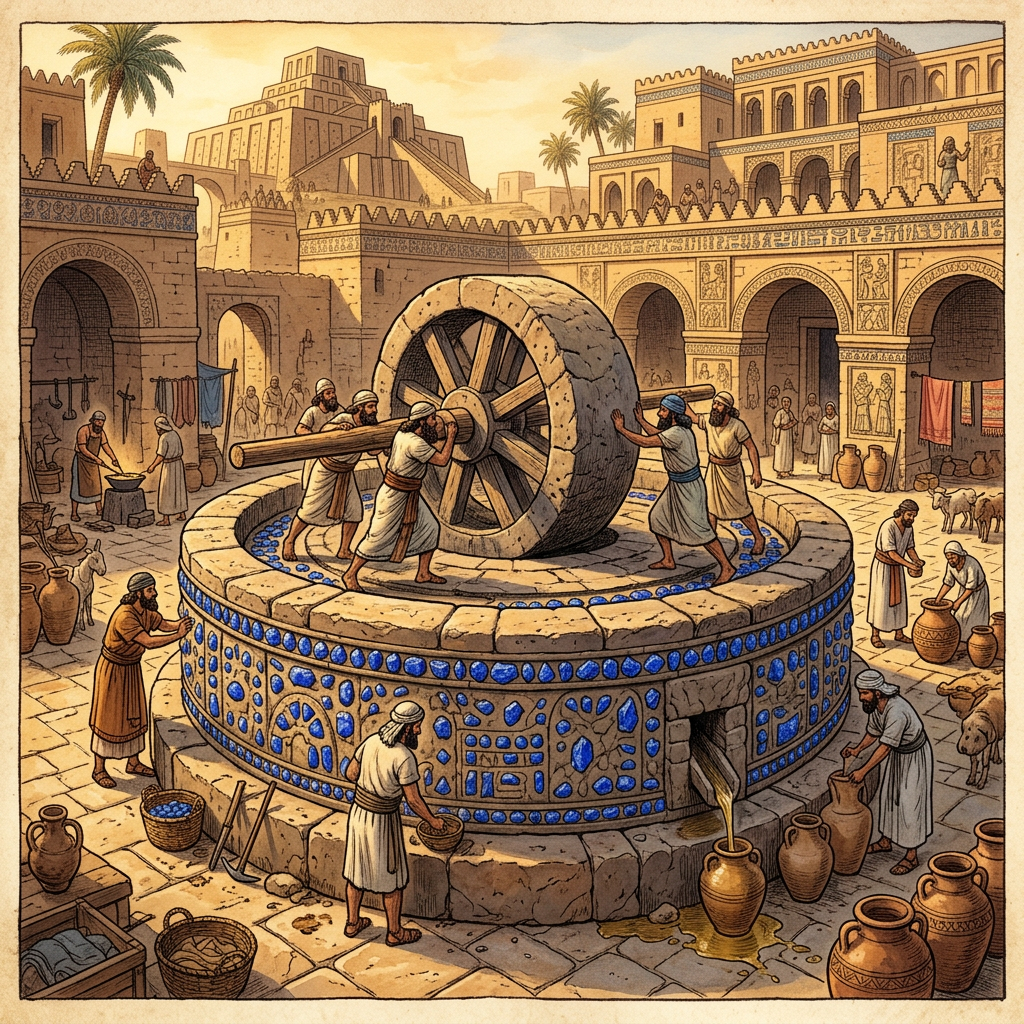
Archaeologists at the site of Mari in modern-day Syria have discovered monumental stone presses decorated with lapis lazuli rosettes, used specifically for the ritual extraction of date syrup. Cuneiform tablets found nearby identify these tools as the centerpiece of the 'Festival of the First Sweetness,' a week-long celebration held at the peak of the date harvest to honor the goddess Ishtar’s role in agricultural fertility.
The use of lapis lazuli—a gemstone imported from as far as modern Afghanistan—on agricultural equipment underscores the extreme sacredness of the harvest process. The festival involved the public distribution of 'blessed' syrup, which was believed to possess healing properties and ensure the continued favor of the gods for the city-state’s commercial and agricultural endeavors.