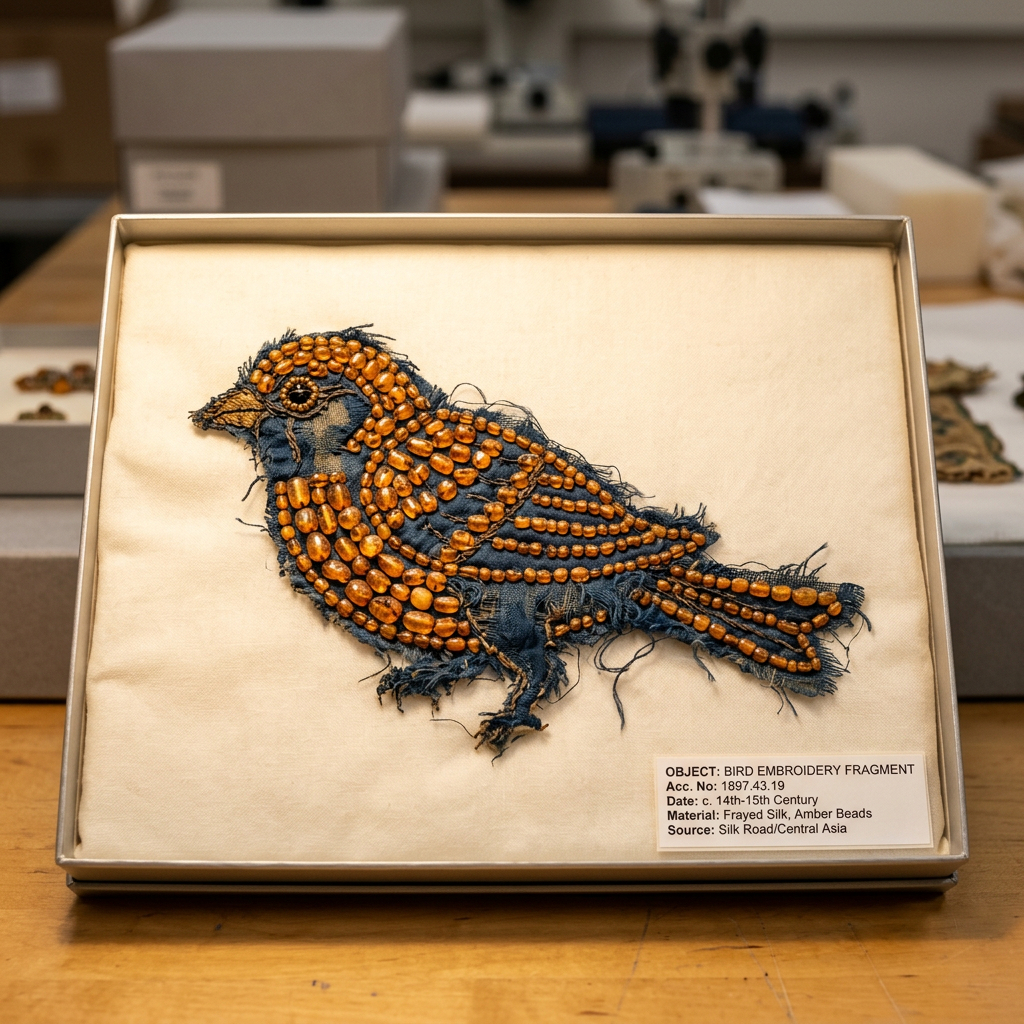
A recent excavation of a Kofun-period burial mound in southern Japan has yielded fragments of indigo-dyed silk banners adorned with polished amber beads. Detailed analysis suggests these banners were once mounted on bamboo poles and carried in circular processions during the 'Festival of the Crane’s Flight,' a seasonal event marking the arrival of migratory birds, which were viewed as messengers from the ancestral realm.
The discovery is significant because it provides physical evidence of the use of amber—likely traded from the Asian mainland—in early Japanese ritual life. The crane imagery and the banner-led processions suggest a link between these ancient migratory rites and the later development of regional matsuri (festivals) that celebrate the harmony between the natural world and the spiritual lineage of the community.