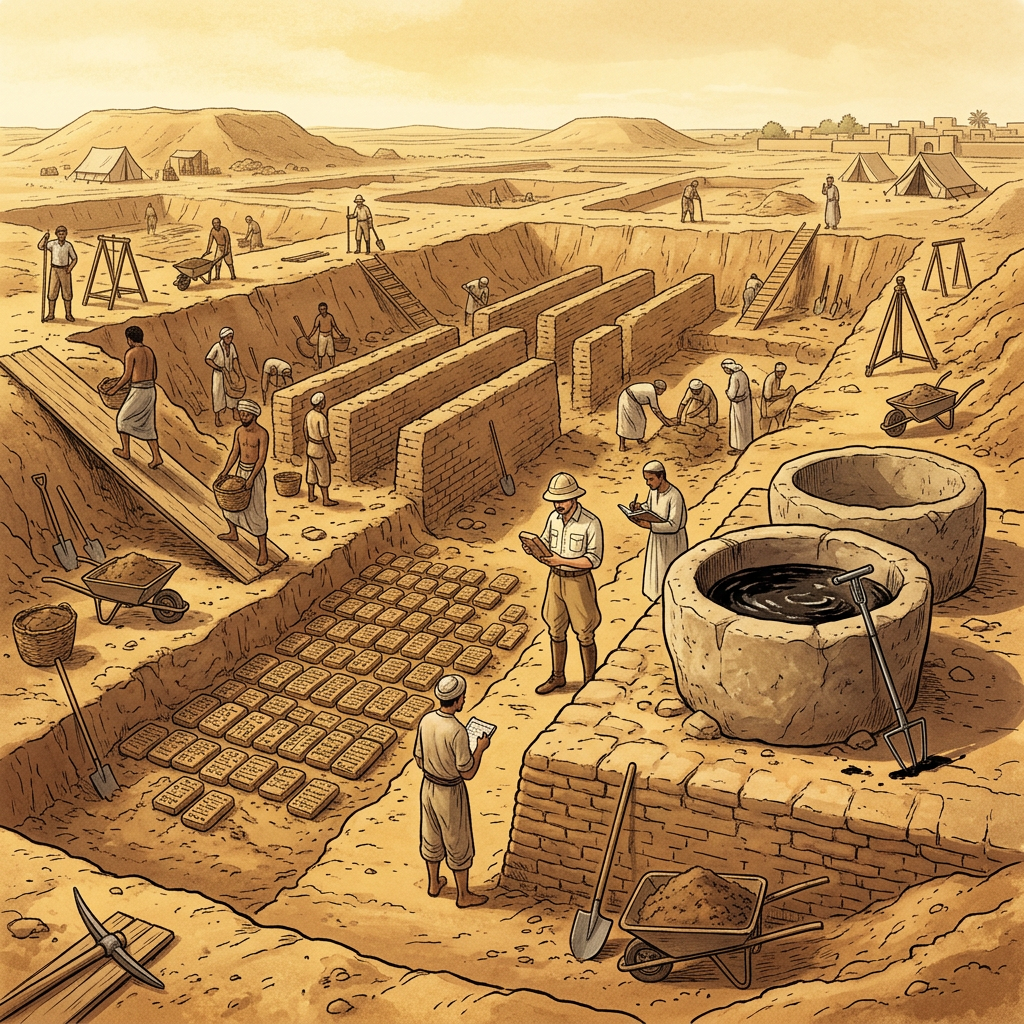
Deciphered cuneiform tablets from the ancient city of Larsa have led archaeologists to the ruins of an "Old Babylonian Bureau of Maritime Bitumen-Physics." This administrative archive contains a series of technical ledgers and thermal-viscosity tables used for the scientific standardization of bitumen application on seaworthy reed-and-timber merchant vessels.
The texts reveal a sophisticated Babylonian understanding of how varying sea temperatures affected the structural integrity of waterproof sealants during long-distance voyages to Dilmun and beyond. By analyzing these records, scholars can now reconstruct the scientific protocols that ancient Mesopotamian shipwrights used to calculate precise bitumen-to-resin ratios, ensuring their fleets could withstand the harsh conditions of the Persian Gulf.