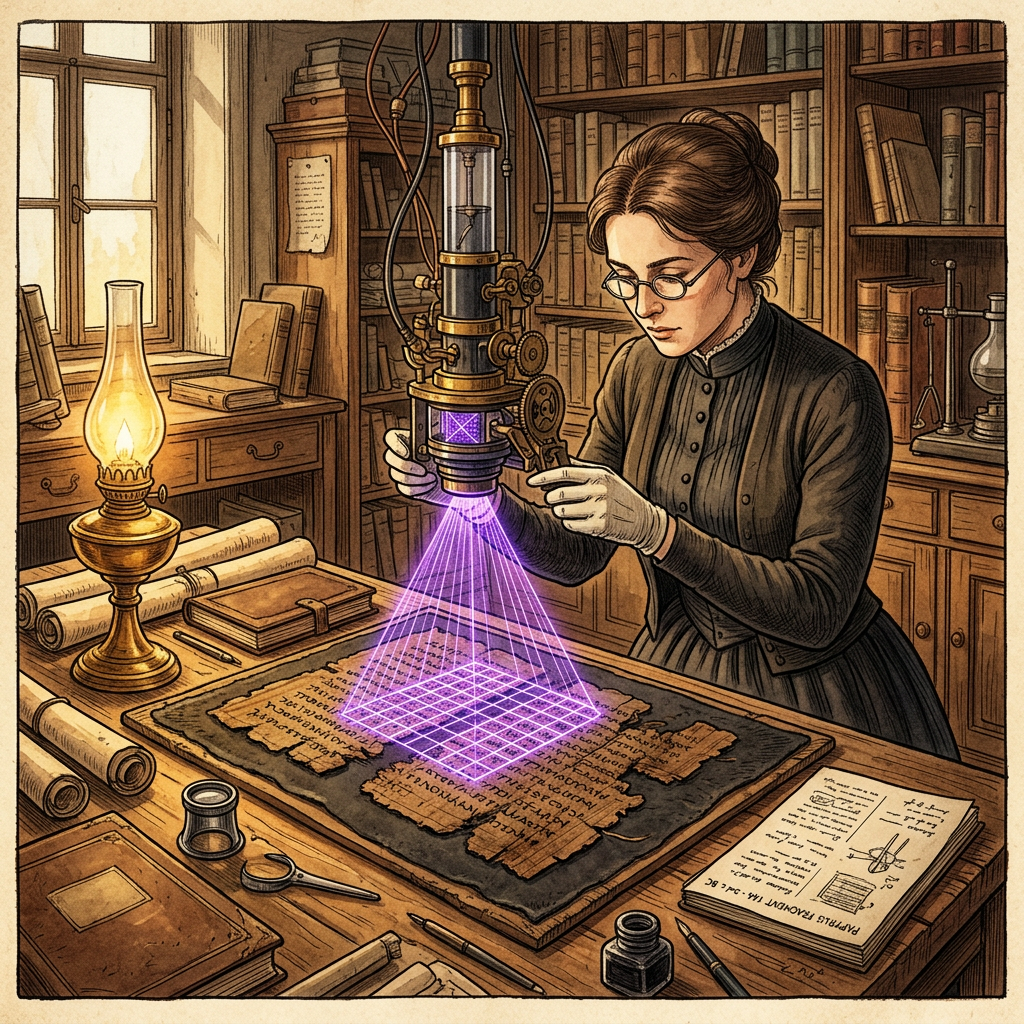
A new imaging technique known as Photon-Sieving has allowed researchers to successfully read the contents of charred papyrus fragments found in the ruins of the White Monastery in Egypt. The technology uses specialized light wavelengths to differentiate between the carbonized ink and the burnt organic background, effectively 'peeling' back the layers of damage without physical contact.
The deciphered texts include lost sermons and community records that shed new light on the monastic life and early Christian theology of the 5th century. This breakthrough is expected to be applied to thousands of other carbonized scrolls currently held in museum archives across the globe, potentially recovering entire libraries thought to be lost to fire and time.