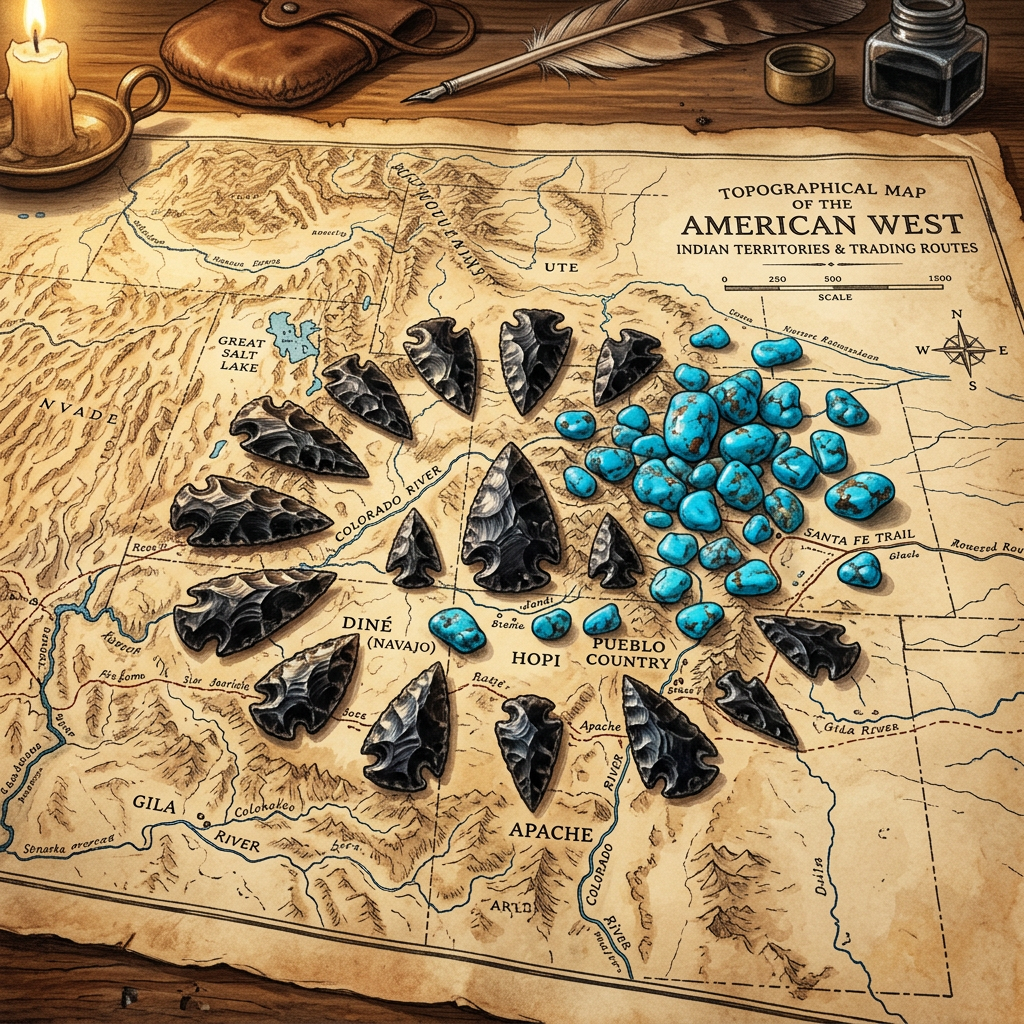
Archaeologists have identified a major prehistoric trade corridor linking the Great Basin to the Pacific Northwest, designated as the Obsidian and Turquoise Route. Through chemical fingerprinting of volcanic glass and semi-precious stones, the research team demonstrated that indigenous groups maintained stable exchange networks spanning over 1,000 miles as early as 2500 BCE.
This discovery challenges previous assumptions about the isolation of hunter-gatherer societies in the region. The study suggests that these trade links were essential for the movement of ritual items and environmental knowledge, providing a buffer against local resource shortages during periods of climatic shift. The findings were made possible through the use of non-destructive X-ray fluorescence technology on museum collections.