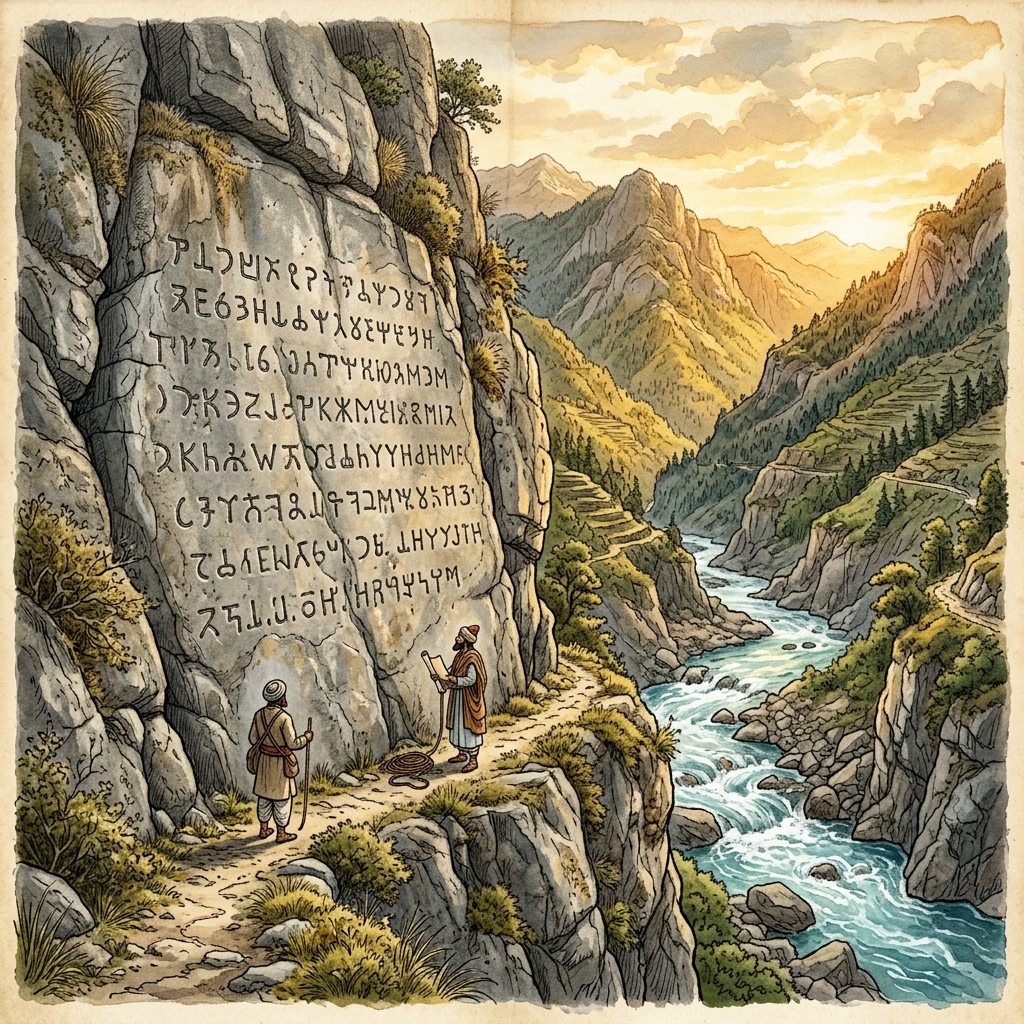
Archaeologists working in the high-altitude regions of the Upper Indus Valley have uncovered a series of rock inscriptions dating back to the 4th century BCE. These inscriptions, carved in an early Brahmi variant, belong to a lost school of thought termed 'Niti-Setu' or the 'Bridge of Ethics'. The text focuses on the philosophy of connectivity, emphasizing the moral obligation of a society to maintain pathways and facilitate the movement of travelers and ideas.
The inscriptions detail a set of moral laws that prioritize communal infrastructure as a spiritual act. According to the lead researcher, these findings provide evidence of a pre-Mauryan ethical framework that integrated civil engineering with spiritual virtue. The discovery suggests that the development of the Silk Road was supported not just by trade, but by a robust wisdom tradition that viewed geographic connection as a prerequisite for metaphysical enlightenment.