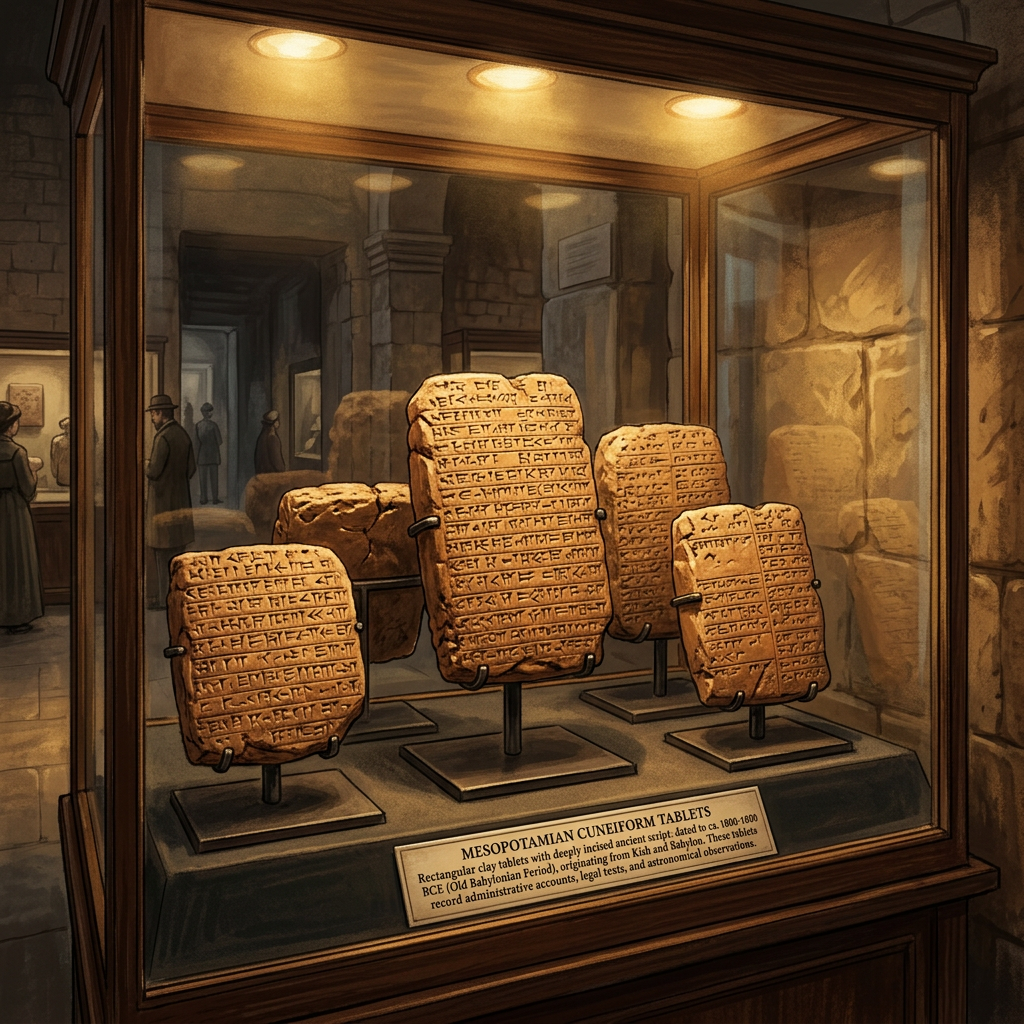
Archaeologists in Haryana have announced the discovery of a set of inscribed clay tablets dating to approximately 450 BCE. The tablets contain a treatise titled 'Karya-Karana-Anuvada', which offers a systematic analysis of causality and moral reciprocity. Unlike the religious focus of the Vedas, this text approaches the law of cause and effect as a logical and natural necessity that governs both the physical world and human social interactions.
The tablets provide a fascinating look into the proto-scientific logic of the late Vedic period. They outline a philosophy where every action is a 'debt' that must be balanced by a corresponding 'result', creating a cosmic ledger of ethical equilibrium. This find is regarded as one of the oldest extant examples of a non-theistic ethical system in India, predating many of the formal developments of the later Nyaya and Samkhya schools.