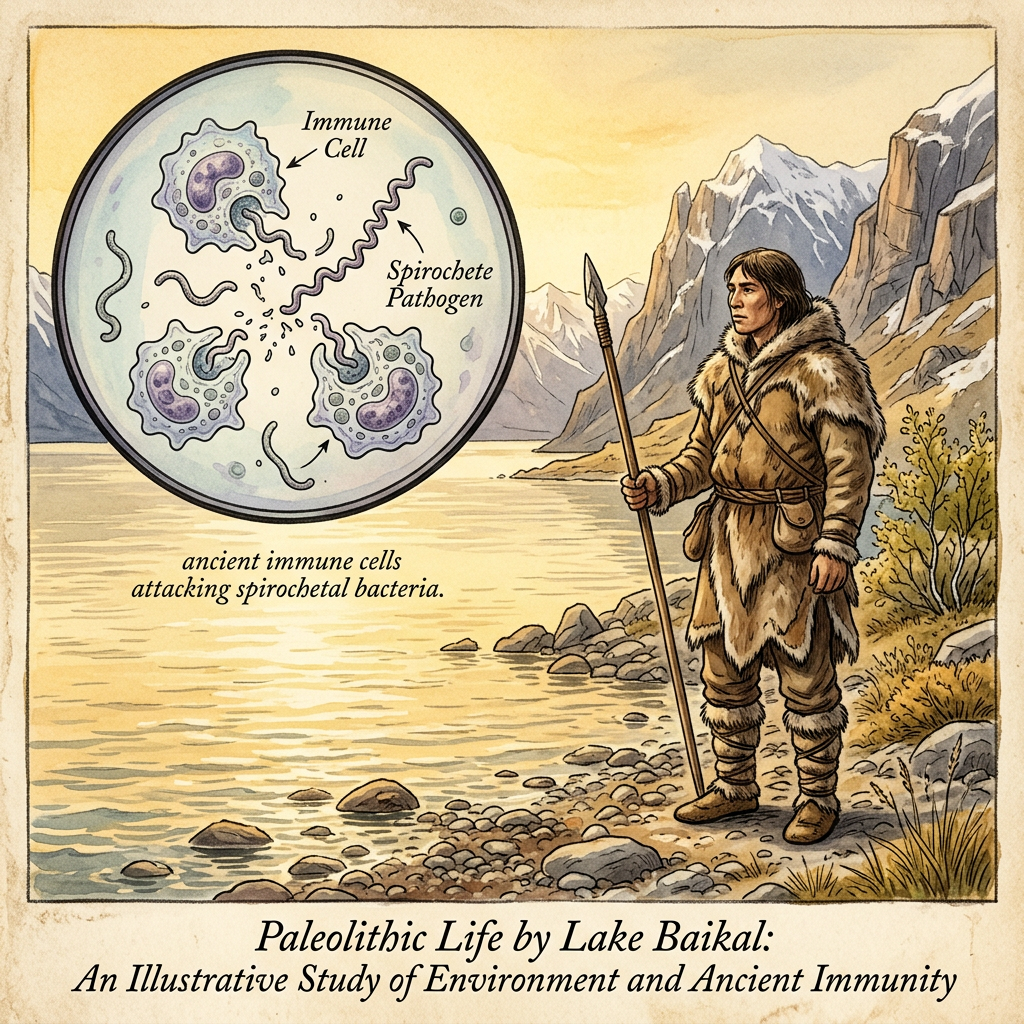
A paleogenetic study published in The Lancet Paleo-Health has identified the earliest known genetic adaptation to spirochetal pathogens in 12,000-year-old remains from the Lake Baikal region. The analysis of dental pulp DNA revealed specific immune system polymorphisms that provided resilience against tick-borne infections common in the post-glacial transition.
This discovery provides evidence of long-term host-pathogen co-evolution in northern Eurasia. It demonstrates that early hunter-gatherer societies were already undergoing significant evolutionary pressure to adapt to local environmental hazards long before the rise of settled agricultural communities and domestic livestock.