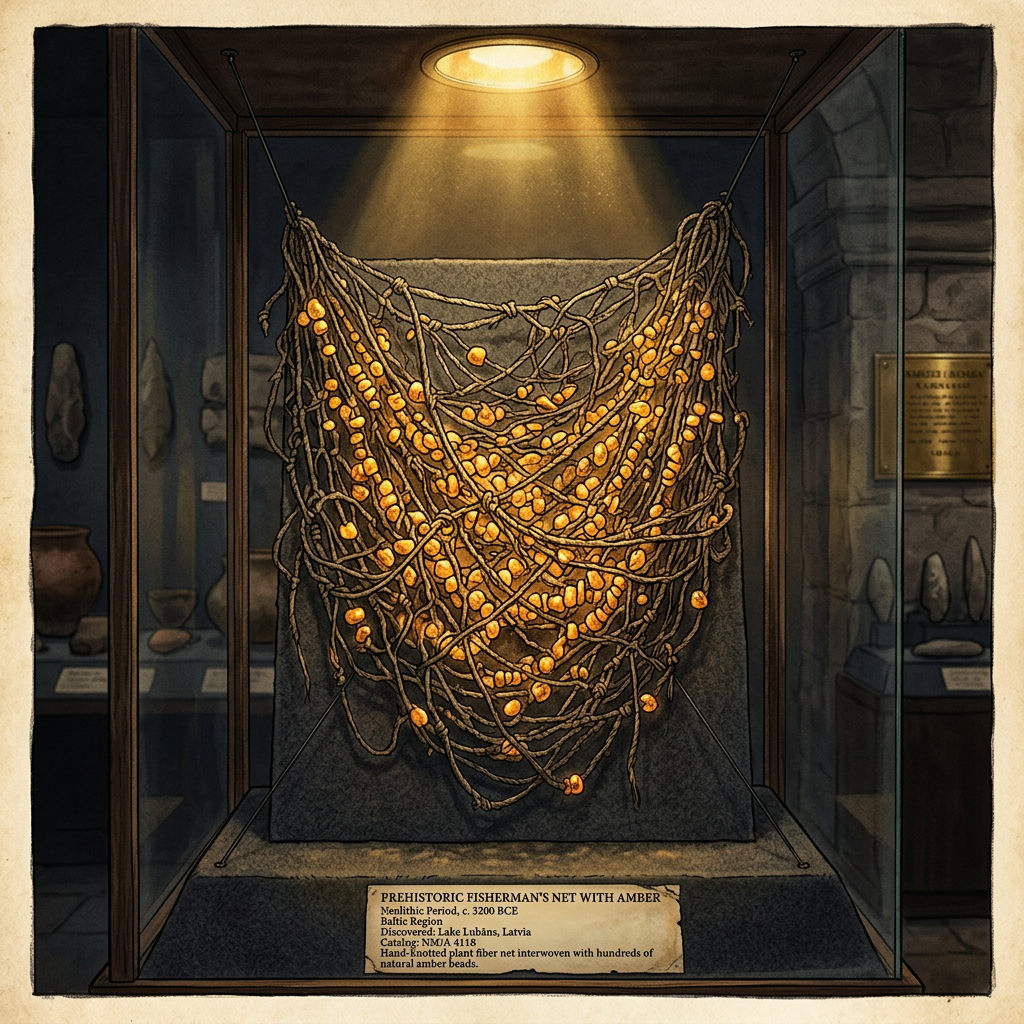
Deep within a peat bog in Scania, Sweden, researchers have discovered fragile remains of amber-threaded ritual nets dating to the Bronze Age. Unlike functional fishing gear, these nets were woven with thousands of small, unpolished amber beads at every intersection. They are thought to have been used during "Midsummer-Tide" festivals, where they were ceremonially cast into the water to 'catch' the first light of the summer sun and ensure an abundant harvest of fish.
The preservation of the organic fibers alongside the amber offers a rare glimpse into the artistry and symbolic complexity of early Nordic coastal traditions. Experts suggest that the golden hue of the amber was intended to mirror the sun, creating a spiritual tether between the celestial body and the bounty of the sea during the year's longest days.