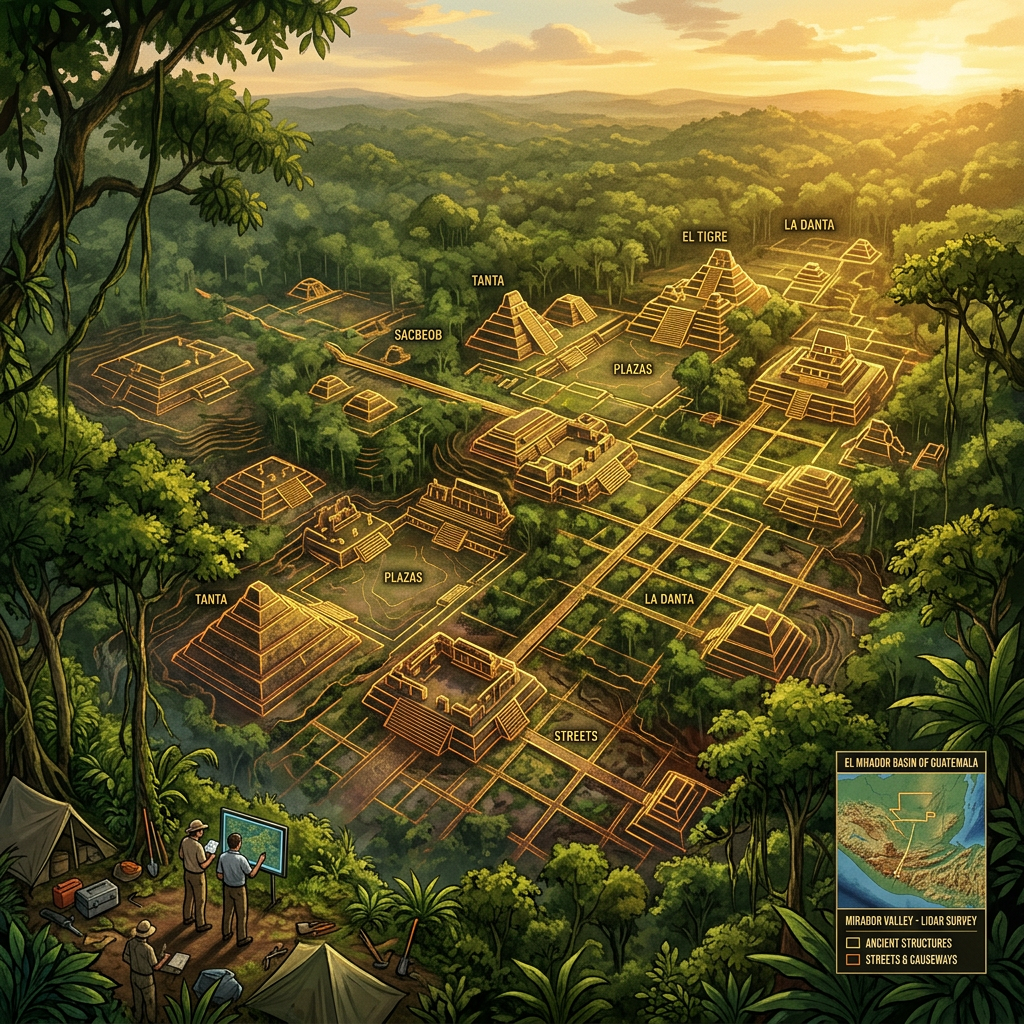
Advanced LiDAR (Light Detection and Ranging) surveys have revealed a previously unknown urban metropolis hidden beneath the dense canopy of the Sierra Madre de Chiapas. Termed 'The Lost City of the Quetzal', the site covers over 40 square kilometers and includes over 2,500 individual structures, such as stepped pyramids, grand plazas, and a sophisticated terraced irrigation system that allowed for high-altitude farming.
Archaeologists believe the city served as a major trade hub between the Maya lowlands and the Pacific coast, specializing in the trade of iridescent quetzal feathers and high-quality jade. The discovery challenges existing theories regarding the density of pre-Columbian settlements in the rugged highland regions of Southern Mexico and suggests a much more complex geopolitical landscape during the Classic Period.