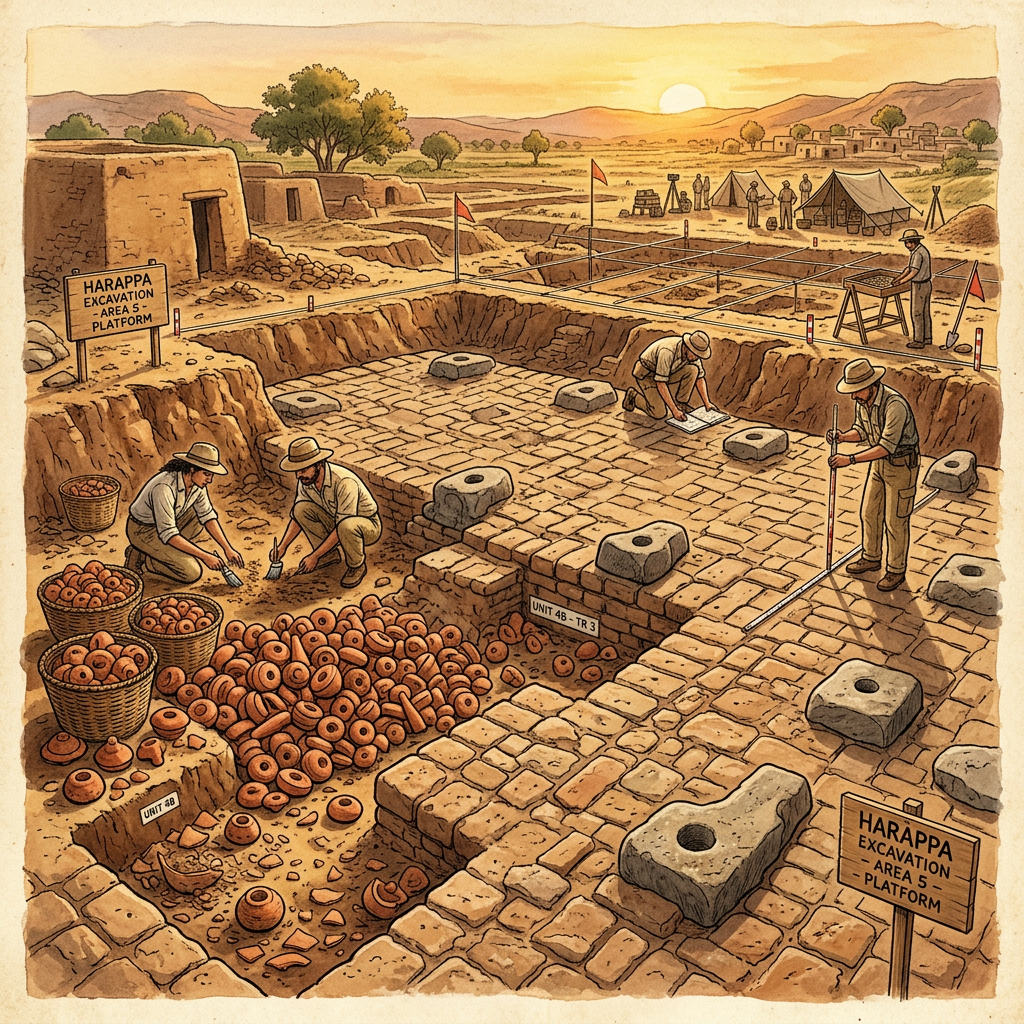
A new excavation season at the Mature Harappan site of Rakhigarhi has yielded evidence of a specialized industrial sector dedicated to large-scale fiber-rope production. Archaeologists from the Archaeological Survey of India (ASI) identified a series of long, paved rectangular platforms equipped with stone-carved anchor points, likely used for the tensioning and twisting of heavy cordage. This discovery confirms that the Indus Valley Civilization had standardized rope-making facilities to support its extensive maritime and construction industries.
Among the finds are hundreds of terracotta and stone spinning weights, many of which bear unique etched symbols potentially denoting the weight or length of the rope produced. Soil analysis near the platforms revealed significant concentrations of carbonized hemp and jute fibers, suggesting these were the primary raw materials. The layout of the manufactory indicates a highly organized workflow, with separate areas for fiber retting, carding, and final braiding.
The scale of the facility suggests that Rakhigarhi served as a major logistics hub, providing high-tensile cordage for the massive brick-hauling operations required to build the city's monumental structures. This find adds a new dimension to our knowledge of Harappan industrial specialization beyond pottery and bead making.