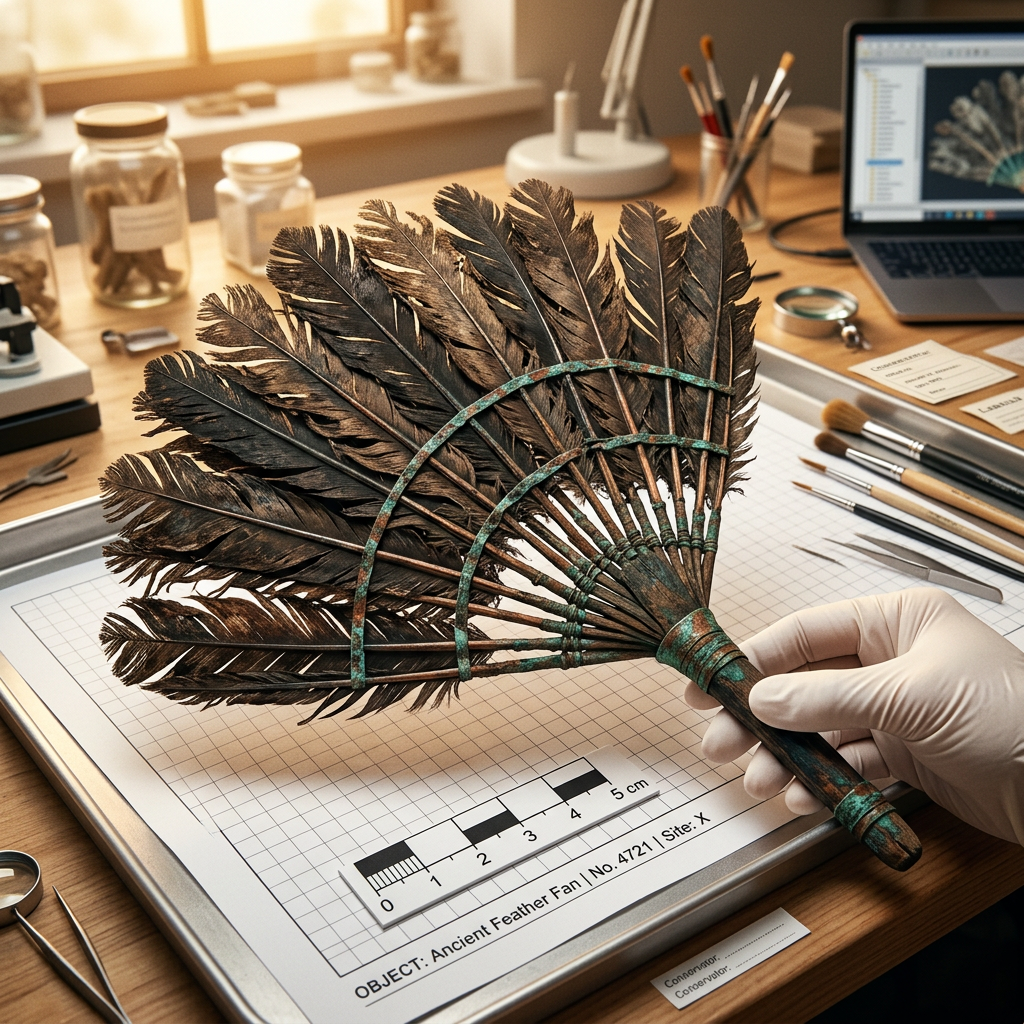
During an emergency excavation at a mound site in Louisiana, archaeologists recovered the carbonized remains of several ceremonial fans. These fans were constructed using meticulously woven bird feathers reinforced with thin, hammered copper strips, a technique previously undocumented in Mississippian culture. Researchers believe these fans were the primary regalia for the 'Sun-Greeting' dance, a rite designed to draw solar energy into the community’s central plaza.
The discovery is particularly significant because it includes traces of cinnabar and indigo pigments, suggesting the fans were vibrantly colored to represent the spectrum of the sky at dawn. This find provides a direct link between the aesthetic grandeur of Mississippian festivals and the spiritual belief in the sun as the ultimate life-giver.