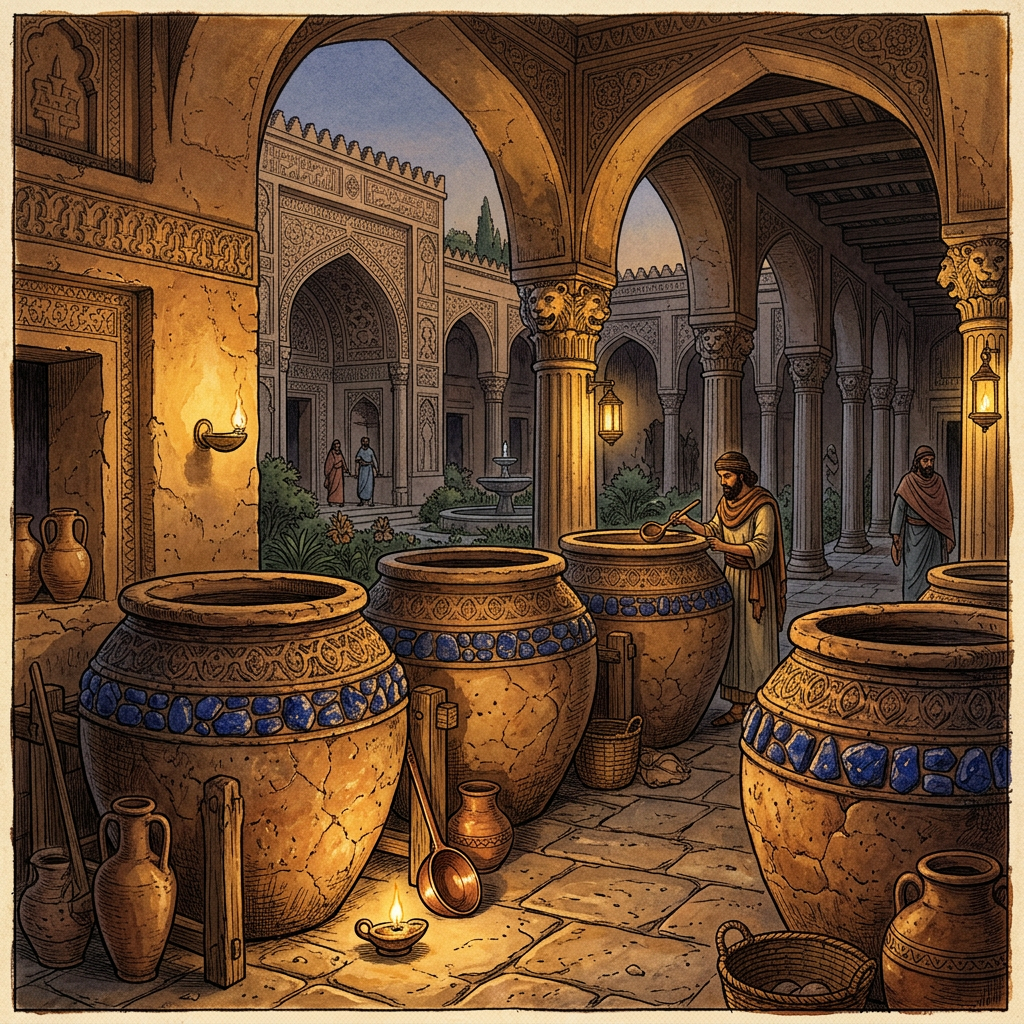
Excavations near the ruins of Persepolis have revealed a sophisticated industrial complex dedicated to the production of ritual rose water. The site contains massive ceramic vats adorned with lapis lazuli studs, which were used to ferment a unique floral-based elixir for the "Festival of the Pink Mist." This ancient celebration involved the systematic saturation of public squares with aromatic vapors to welcome the arrival of the spring equinox.
Chemical residues found in the vats indicate a mixture of Damask rose, wild honey, and mountain herbs. The scale of the production suggests that the Achaemenid state provided these sensory experiences as a form of royal benevolence, ensuring that the entire citizenry could participate in the purification rituals of the new year.