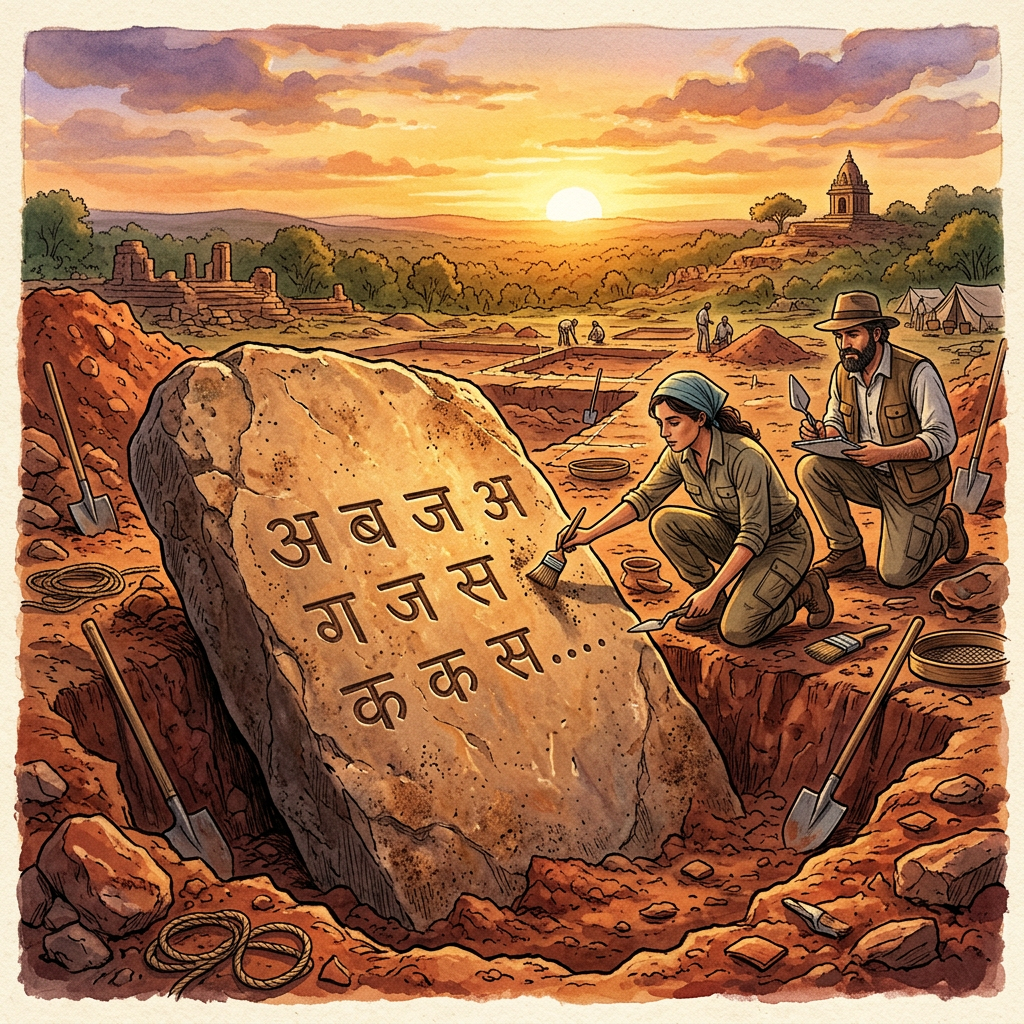
A series of previously unknown stone inscriptions has been unearthed during excavations at a site near Amaravati in the Krishna River Basin. Dated to approximately the 5th century BCE, the inscriptions outline a complex ethical framework known as Niti-Vahini, or the 'Philosophy of Social Momentum.' The text describes virtue not as a static state, but as a dynamic force generated by the collective alignment of individual intentions toward the common good.
The inscriptions, carved in an early form of Brahmi script, suggest that ancient Indian thinkers in the region were developing sophisticated theories of societal kinesis centuries before later classical periods. These findings indicate that the Krishna Valley was a significant hub for philosophical innovation, focusing on the practical application of Sanatan Dharma principles to urban governance and trade-based social structures. Historians believe these tablets represent some of the earliest recorded examples of political philosophy in the Deccan.