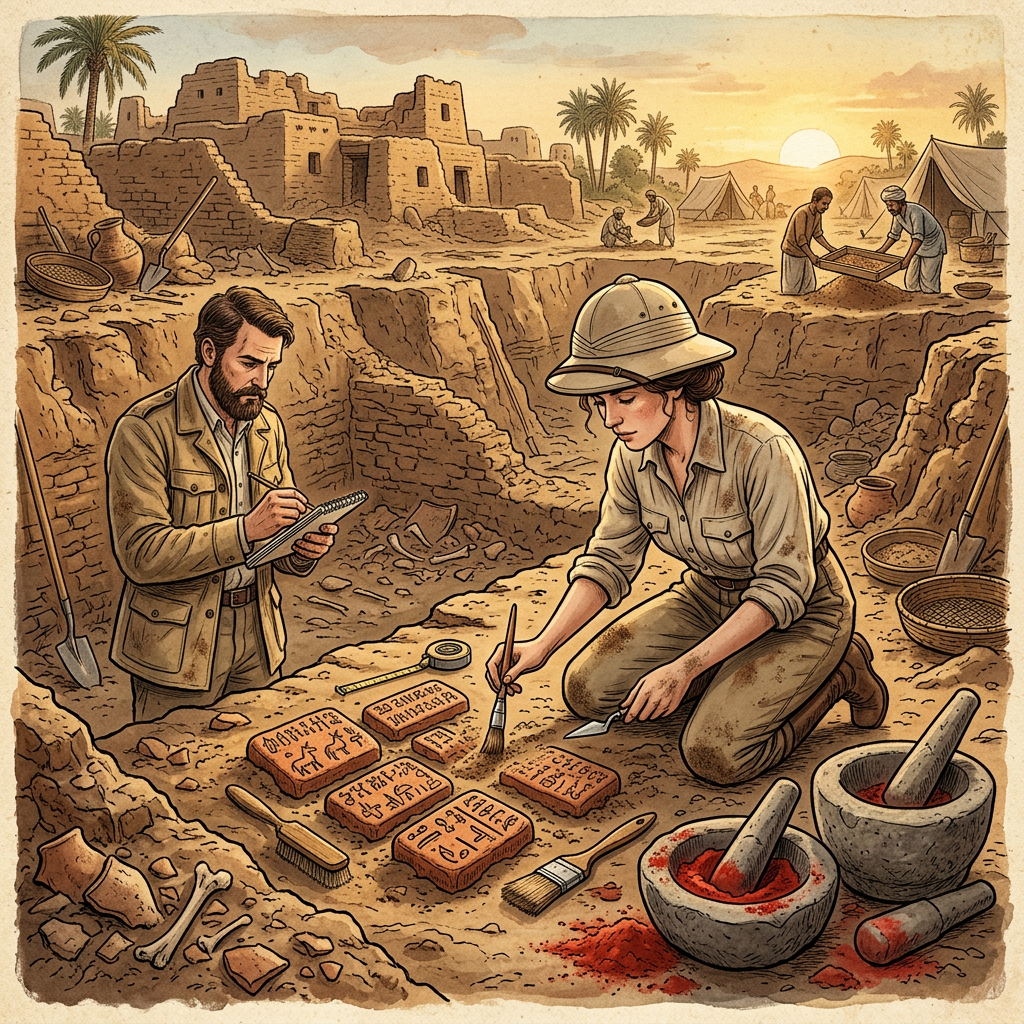
Excavations at the Mature Harappan site of Rakhigarhi in Haryana have uncovered a specialized administrative quarter dedicated to the standardization of mineral-pigment production. Archaeologists unearthed a cache of terracotta tablets belonging to the "Master of the Royal Mineral-Pigment Sourcing," which detail specific mixture ratios for the iconic red and black slips used on high-elite pottery. These records suggest that the Indus Valley Civilization maintained strict quality control over the chemical composition of their ceramic finishes.
The excavation also revealed a series of stone-lined pits containing traces of hematite and manganese, along with specialized grinding mortars. This archive confirms that the distribution of decorative materials was a centralized state function rather than a decentralized craft. Dr. Sanjay Verma, the lead excavator, noted that the discovery of standardized "firing-temperature logs" on several tablets demonstrates an unprecedented level of proto-industrial regulation in the 3rd millennium BCE.