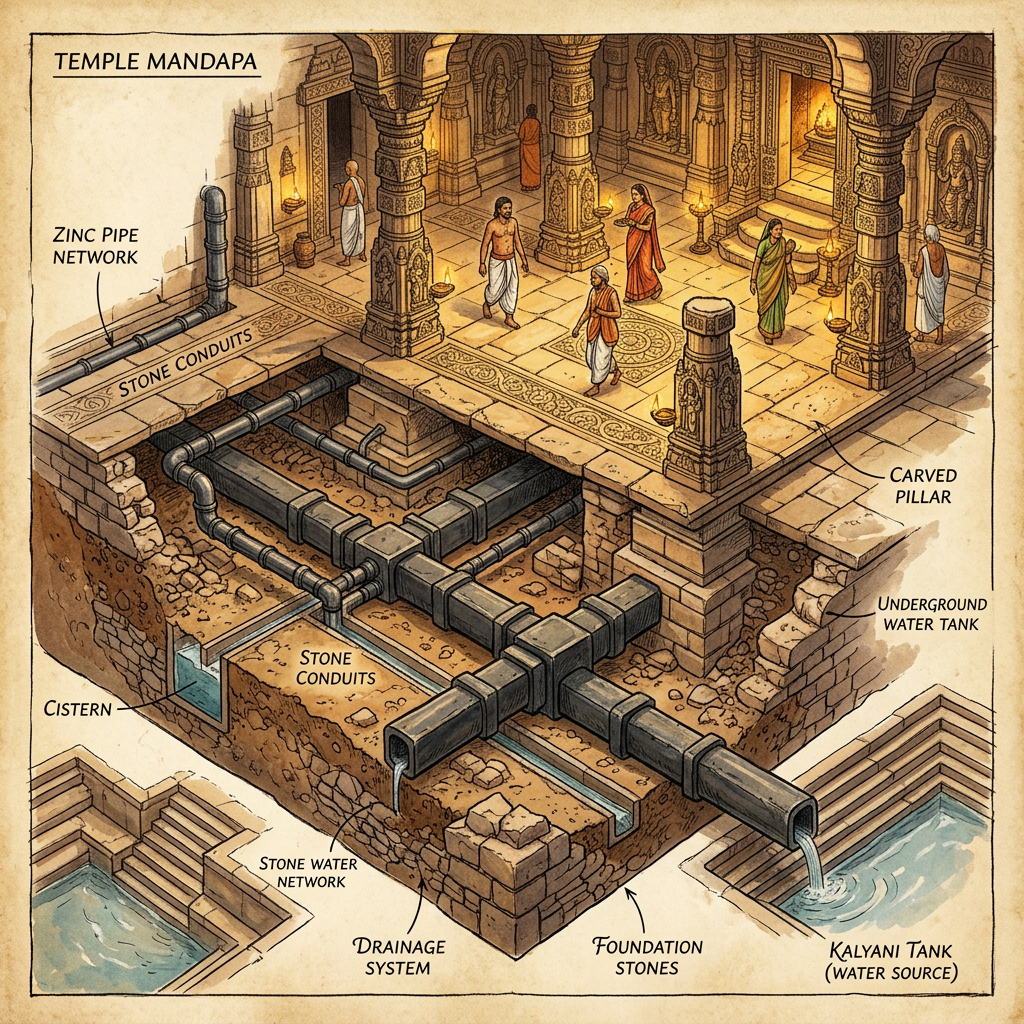
During a major structural conservation project at a 12th-century Kakatiya-style step-temple in Telangana’s Mulugu district, engineers discovered a sophisticated zinc-based water-cooling system hidden beneath the primary sanctum. The system consists of a network of interlocking zinc and stone pipes designed to circulate mountain spring water, maintaining a constant cool temperature within the inner shrine even during peak summer months.
This architectural revelation highlights the Kakatiya dynasty's mastery of hydraulic engineering and metallurgy. Experts believe the use of zinc—a metal known for its antimicrobial properties—was intentional to keep the ritual abhishekam water purified as it moved through the temple’s subterranean reservoirs.