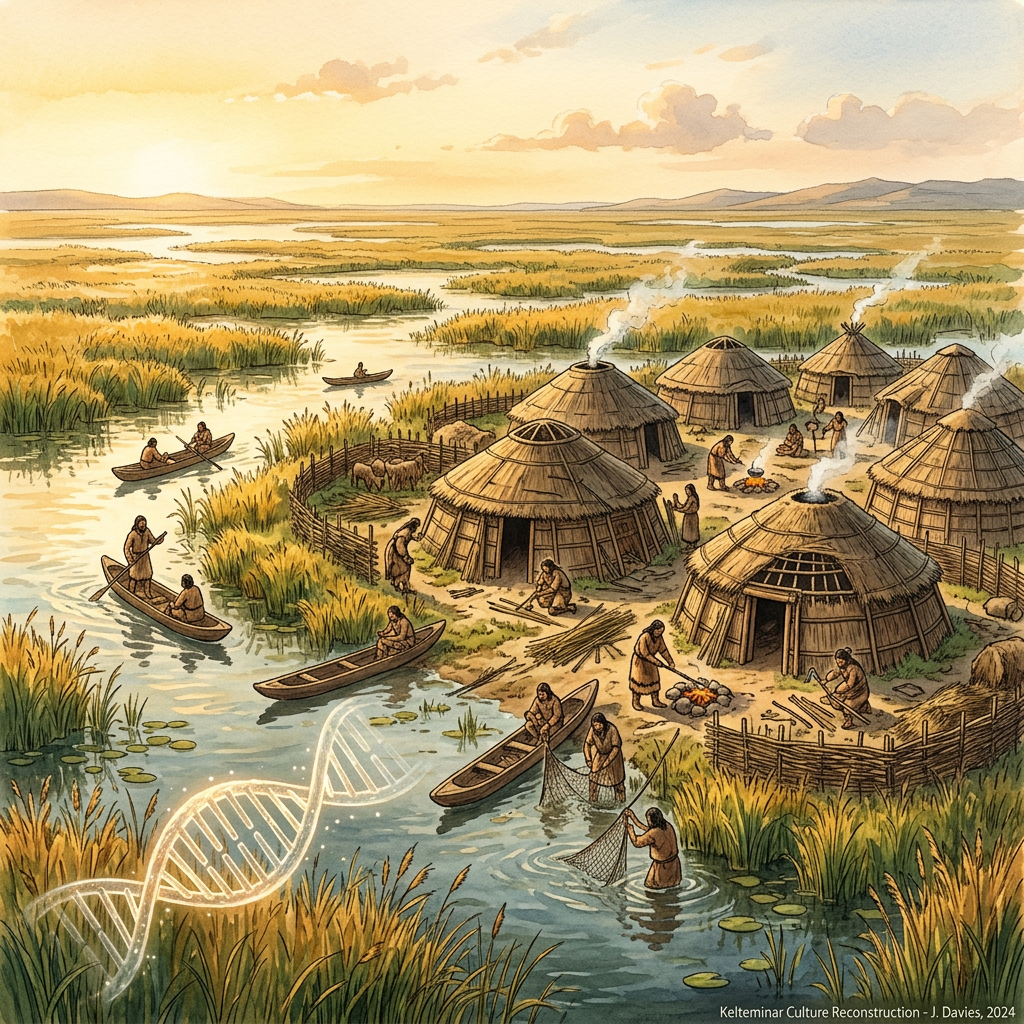
Paleogenomic researchers have sequenced the DNA of 9,000-year-old remains from the Kelteminar culture, located in the modern-day Aral Sea region. The study, published in Cell Genomics, identifies a unique genetic selection in the SLC11A1 gene, which provided these ancient hunter-gatherers with enhanced resilience to pathogens thriving in high-alkali freshwater environments. This discovery provides the first physical evidence of biological adaptation to the unique hydro-geochemical conditions of the Central Asian steppe during the early Holocene.
The findings suggest that the Kelteminar people possessed a specialized immune profile that allowed them to thrive in wetlands where other populations struggled with endemic waterborne diseases. This anthropological research also reveals a previously unknown 'ghost lineage' that contributed to the genetic makeup of the region before the arrival of the first agro-pastoralist groups. The data suggests that this lineage remained isolated for millennia, developing highly specific metabolic traits suited for a diet rich in saline-tolerant fish and aquatic flora.