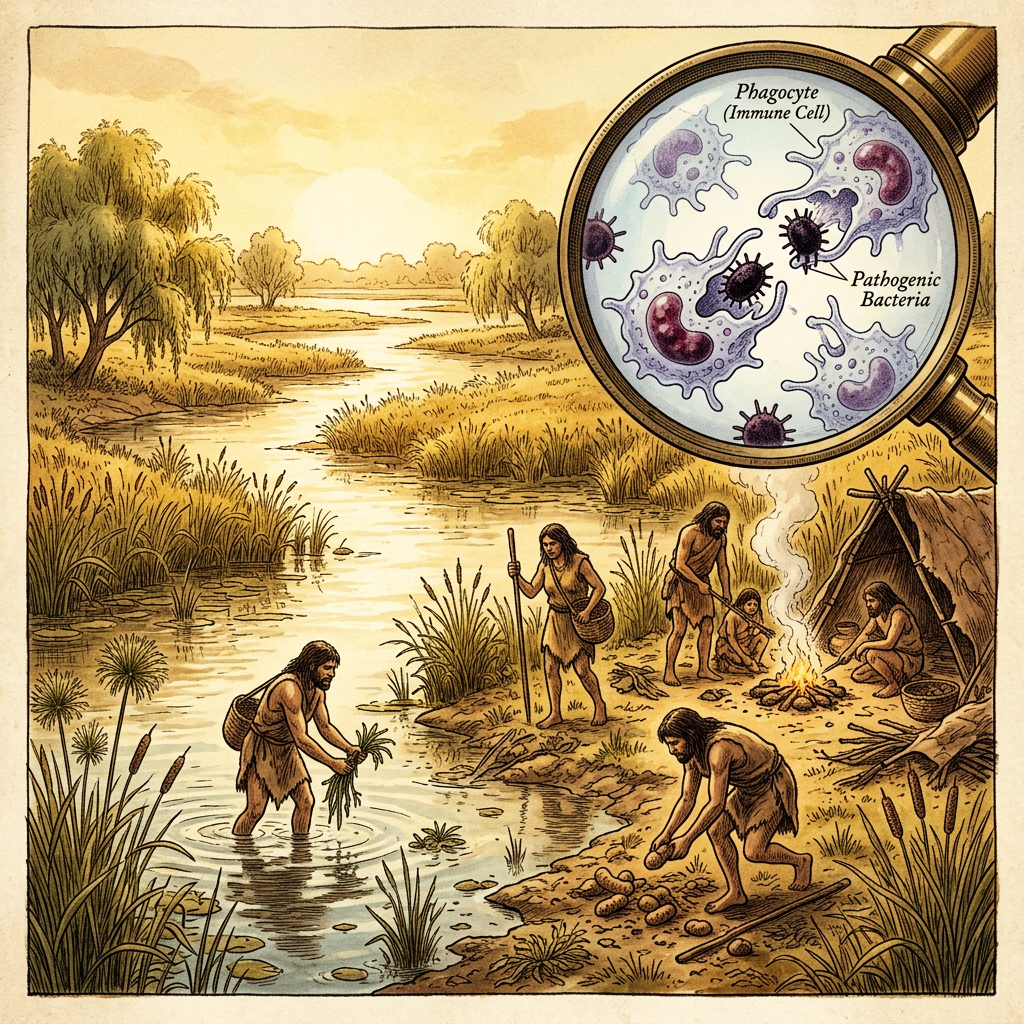
A major paleogenomic study published in Science Advances has identified the earliest known genetic adaptation to Brucellosis in 12,000-year-old remains from the Yellow River Delta. By analyzing the genomes of foragers who inhabited the region before the advent of agriculture, researchers found a significant frequency of a specific variant in the TNFAIP3 gene. This variant appears to have provided protection against the chronic inflammatory effects of Brucella-like pathogens, which were endemic to the wild ruminants the population hunted.
The study challenges the idea that major zoonotic diseases only emerged after animal domestication, suggesting instead that ancient hunter-gatherers were already under intense evolutionary pressure from these pathogens. Furthermore, the anthropological research shows that this genetic marker remained prevalent through the transition to millet farming, providing the biological foundation for the survival of early agricultural communities. This discovery offers a new window into the co-evolution of humans and pathogens in East Asia's first riverine civilizations.