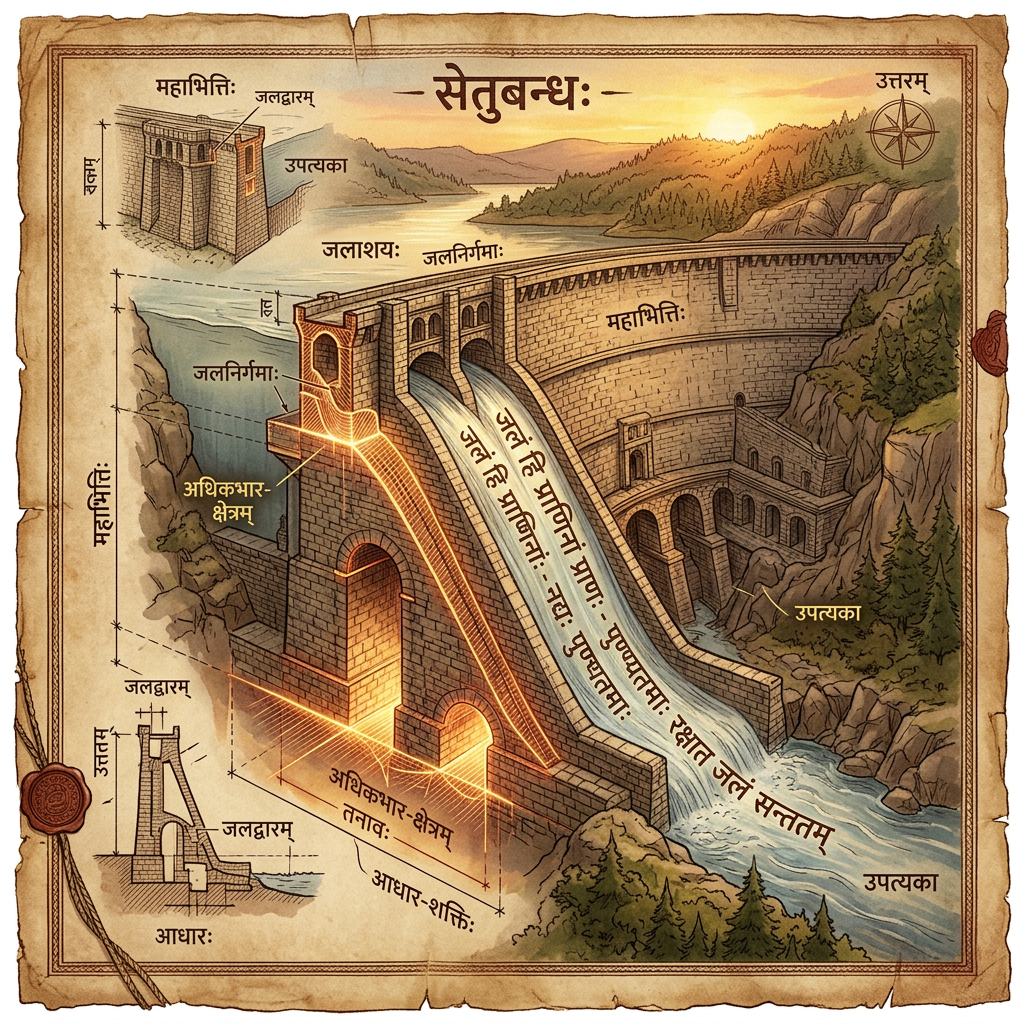
A new study of the 11th-century manuscript Jala-Prabandha, found in the Malwa region, has revealed the earliest known descriptions of hydraulic cavitation and its mitigation in cascade spillways. Engineering historians from IIT Bombay analyzed the text's technical vocabulary, discovering that it prescribes specific curvilinear profiles for stone-lined channels to prevent structural erosion caused by high-velocity water flow. These findings indicate a highly advanced understanding of fluid dynamics in medieval India, specifically applied to the construction of massive reservoir systems.
The treatise includes recursive algorithms to calculate the necessary thickness of spillway walls based on the height of the water head, effectively modeling the pressure differentials that lead to cavitation. According to the research published in the Indian Journal of History of Science, these Sanskrit models were likely used to maintain the durability of the Bhojpur dam and similar structures. This study provides a vital link between ancient Indian mathematics and the practical engineering of large-scale public works.