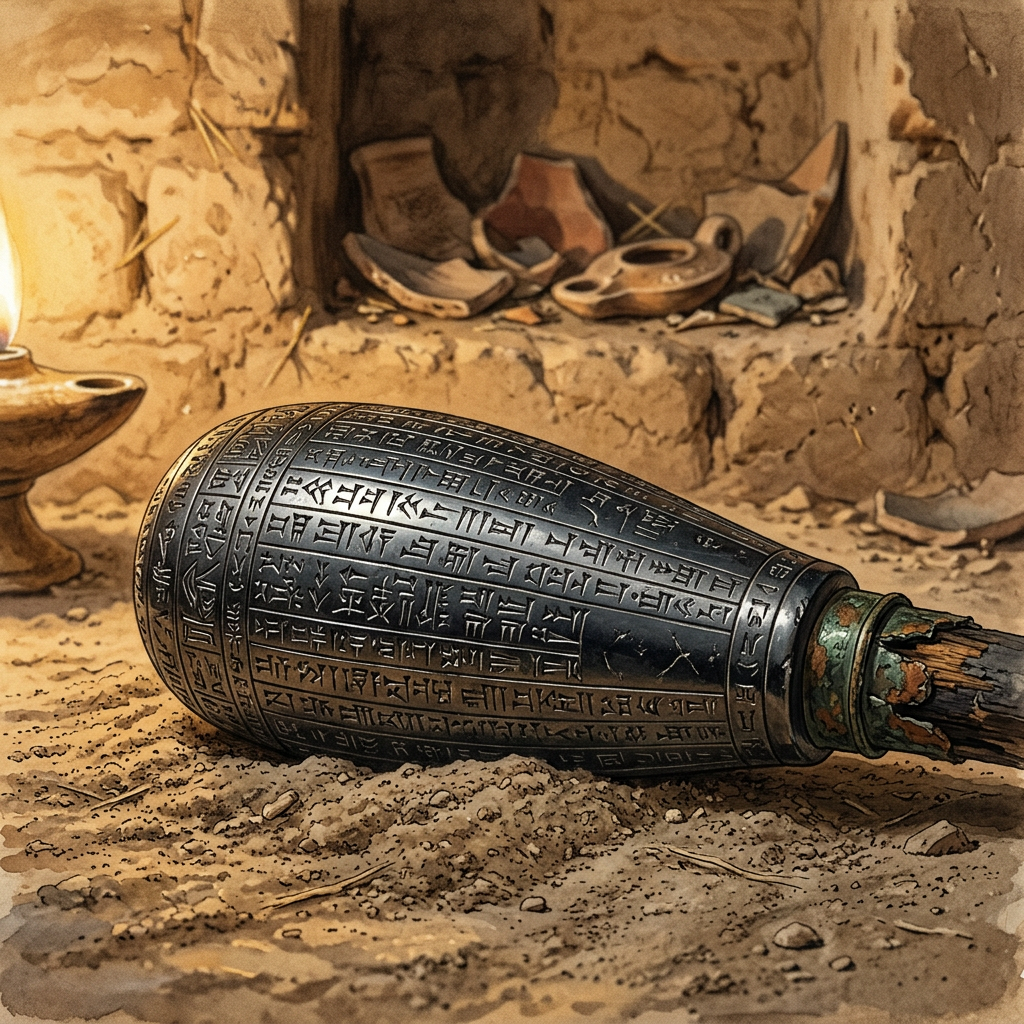
Archaeologists working at the ancient city of Eridu in modern-day Iraq have unearthed a rare cache of ritual scepters fashioned from polished hematite and aged cedar wood, dating back to approximately 3,000 BCE. The artifacts were discovered within a secluded subterranean chamber adjacent to the city's Great Ziggurat, suggesting they were reserved for high-ranking priests during seasonal transitions.
Accompanying the scepters were cuneiform tablets containing early liturgical scripts that describe the "Awakening of the Heavens," a direct precursor to the later Mesopotamian Zagmuk festival. This discovery provides the first physical evidence of organized New Year celebrations in Sumerian society centered on the rejuvenation of kingly power and the symbolic return of the god Enki from the watery abyss.