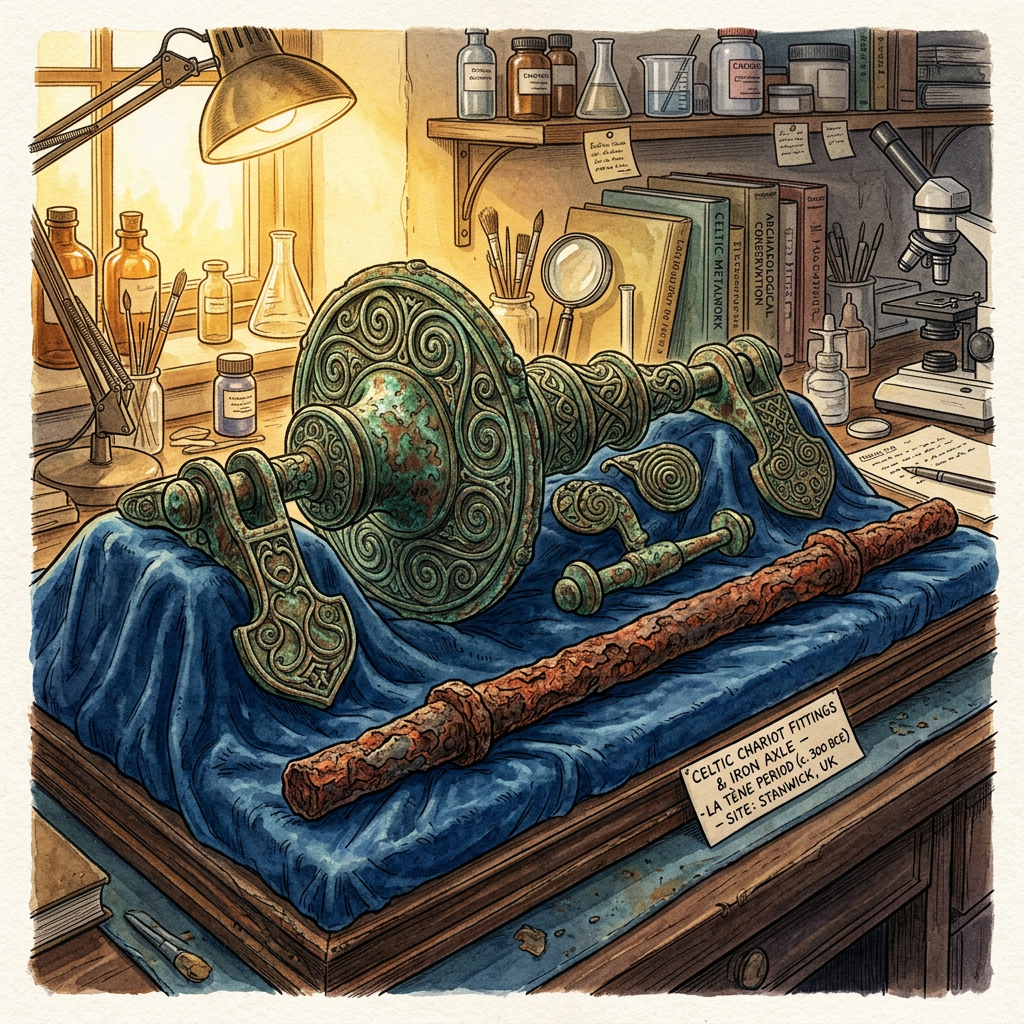
Construction work in central Kyoto has led to the accidental discovery of ornate bronze hubcaps and iron axle reinforcements belonging to ritual wagons from the early Heian period. These fittings are decorated with "mitsu-domoe" symbols and floral motifs, which are still prominently used in the modern Gion Matsuri, one of Japan's most famous festivals.
Researchers state that these artifacts provide evidence of the large-scale logistics required for Goryo-e, the ancient plague-quelling rituals that evolved into the Gion Festival. The discovery of these heavy-duty components suggests that the tradition of parading massive, multi-ton mobile shrines through the city streets began much earlier than previously documented in historical scrolls.