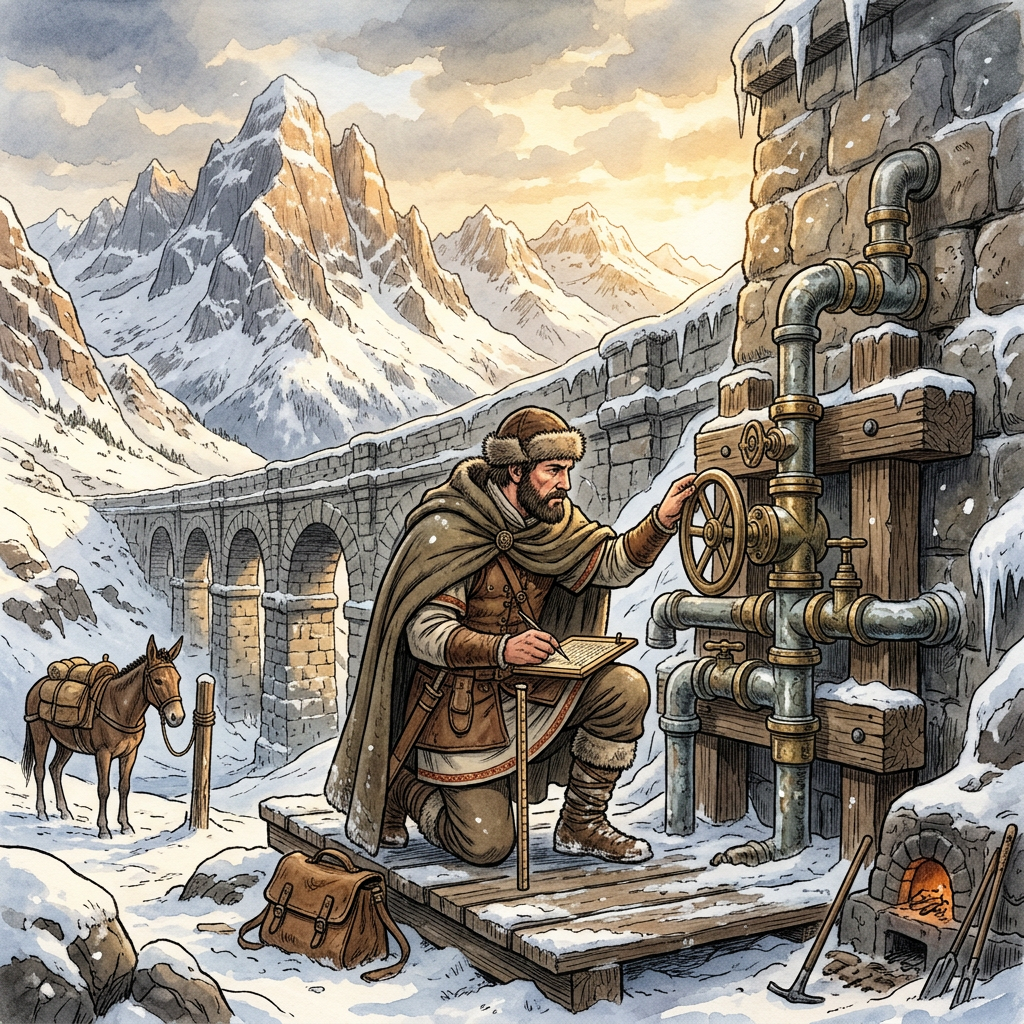
Archaeologists working in the high mountain passes of the Swiss Alps have uncovered the remains of a 2nd-century CE Roman administrative outpost dedicated to aqueduct thermodynamics. The site yielded a cache of master templates for lead air-ventilation valves, which were designed to prevent pressure bursts in gravity-fed water systems crossing steep alpine terrain. These models demonstrate a sophisticated understanding of hydro-physics previously thought to be theoretical rather than standardized.
The bureau appears to have functioned as a quality-control center for the maintenance of trans-alpine water infrastructure. Along with the valve templates, researchers found lead tablets containing maintenance schedules and hydraulic stress-test results signed by imperial engineers. This discovery underscores the extraordinary logistical reach of the Roman Empire's civil engineering departments in managing extreme environments.