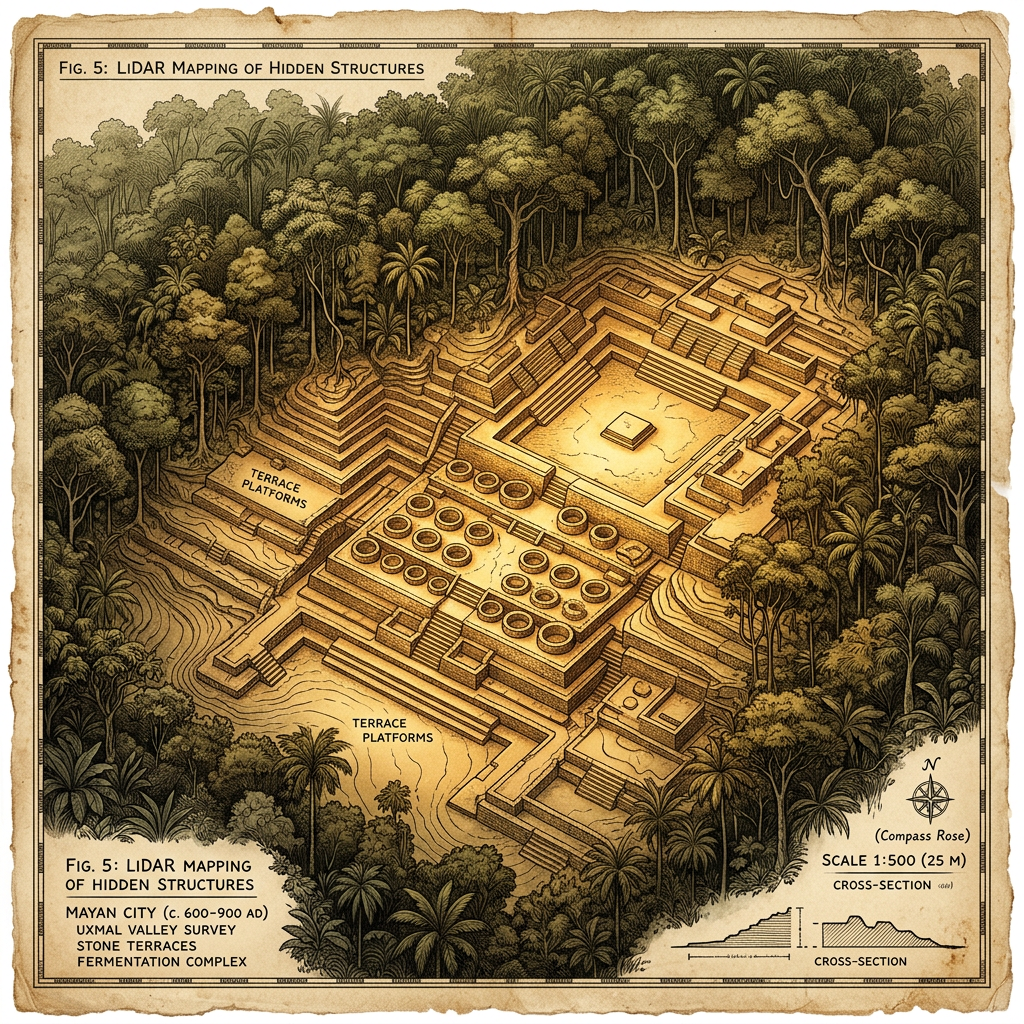
New LiDAR (Light Detection and Ranging) surveys in a remote sector of the Petén jungle have identified a unique industrial complex specialized in the large-scale production of fermented honey beverages, or balché. The mapping revealed a system of vertical stone terraces designed to cultivate specific flowering trees for honeybees, connected to a central facility with hundreds of specialized stone vats and sluice-gated fermentation chambers.
This discovery changes current theories regarding the Maya ritual economy, suggesting that the production of ceremonial beverages was a highly industrialized state-controlled activity rather than a local household task. The spatial layout of the hub suggests that the flow of nectar and fermented honey was gravity-assisted, integrated into a broader hydraulic system that also managed local water needs during the dry season.