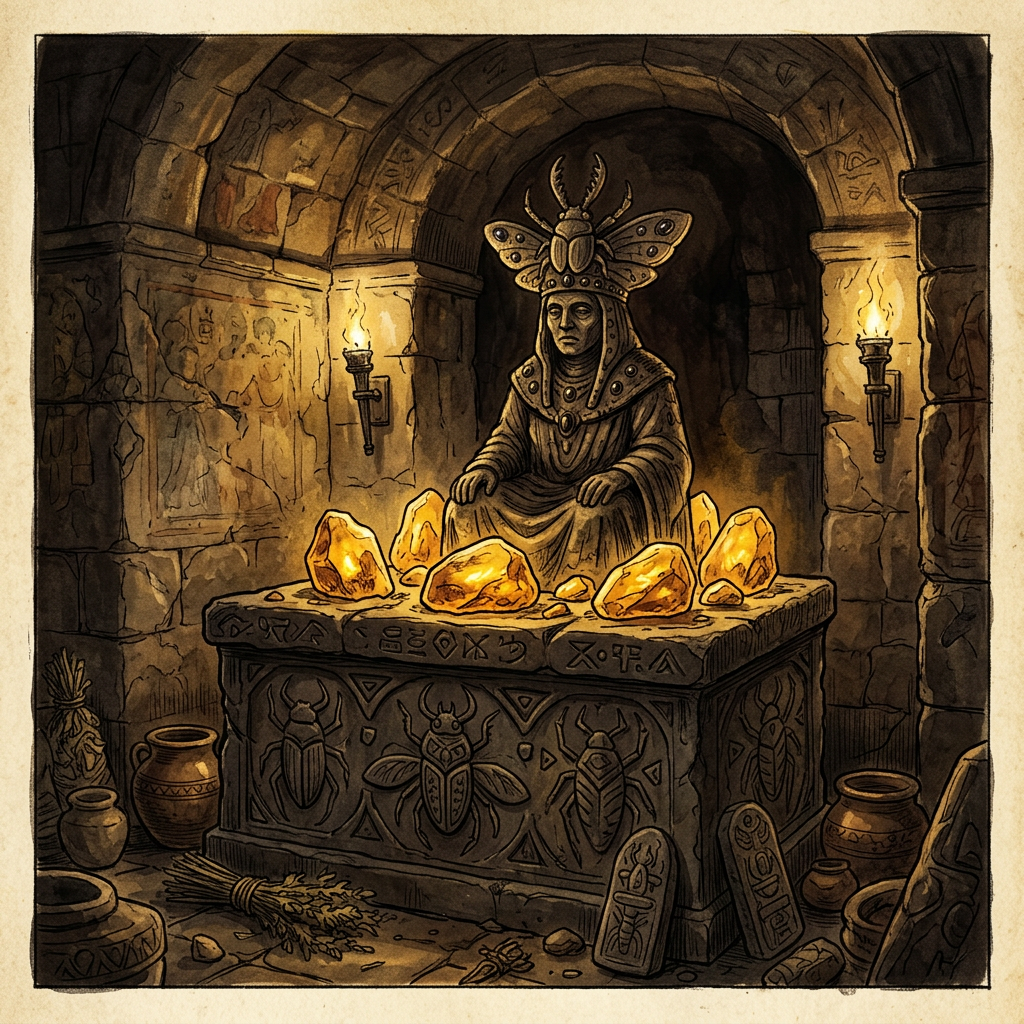
In a remote valley in central Turkey, a team from the Anatolia Archaeological Institute has discovered a unique 4th-century BCE sanctuary dedicated to a local Phrygian insect deity. Dubbed the 'Temple of the Sacred Mantis', the structure features a series of limestone altars inlaid with large pieces of Baltic amber. This suggests far-reaching trade networks connecting the Mediterranean to the North Sea during the Hellenistic transition.
The most striking feature of the temple is a central relief depicting a priestess in a mantis-like headdress, performing what appears to be a seasonal agricultural rite. The discovery of charred botanical remains, including opium poppies and saffron, indicates that the temple was likely used for oracular or shamanic purposes. This find is rewriting the history of minor cults in ancient Phrygia, highlighting the diversity of religious practices beyond the worship of Cybele.